Why Traditional Customer Feedback Programs Fail Without AI

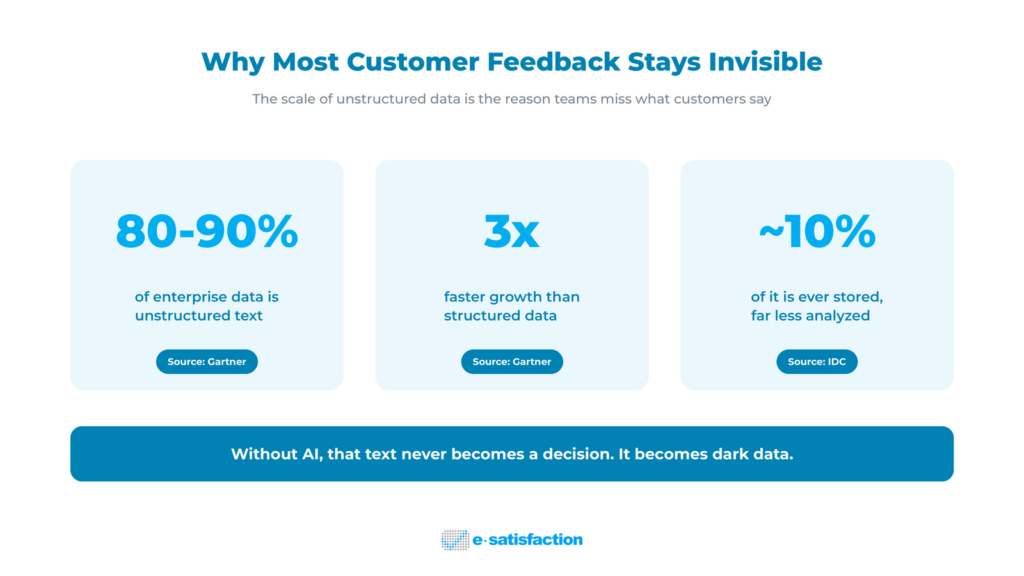
Most customer feedback analytics programs fail for three reasons: they capture a thin, biased slice of reality, they analyze it too slowly, and they rarely close the loop. The bulk of feedback is unstructured text that never gets read. AI fixes the three breakpoints, scale, speed, and signal, so teams hear the silent majority and act before customers leave.


You run surveys. You track NPS. You have a dashboard. So why does nothing seem to change? The problem usually isn’t effort. It’s that traditional customer feedback analytics was built for a world that no longer exists, one where customers answered surveys and complaints arrived neatly through one channel.

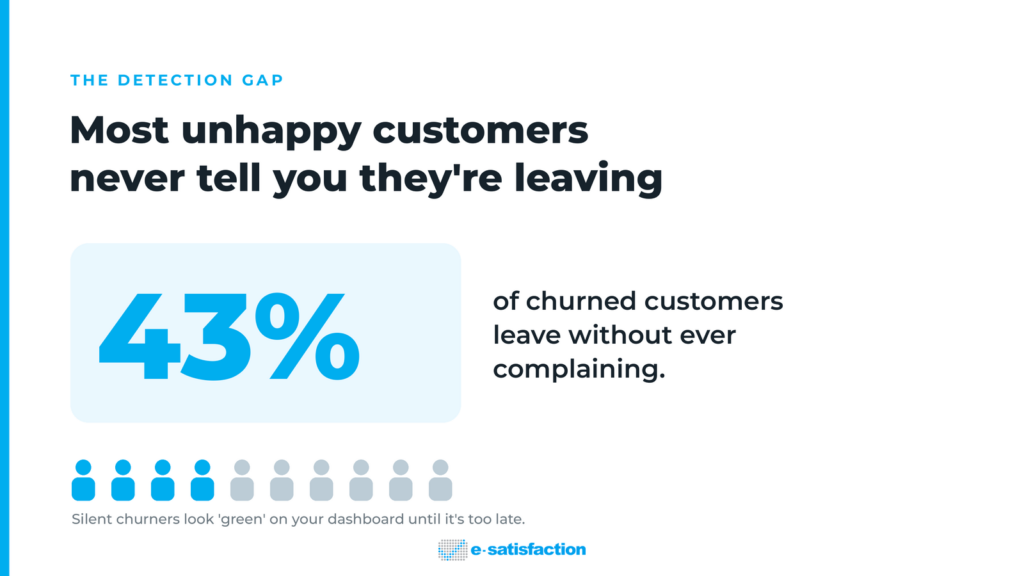
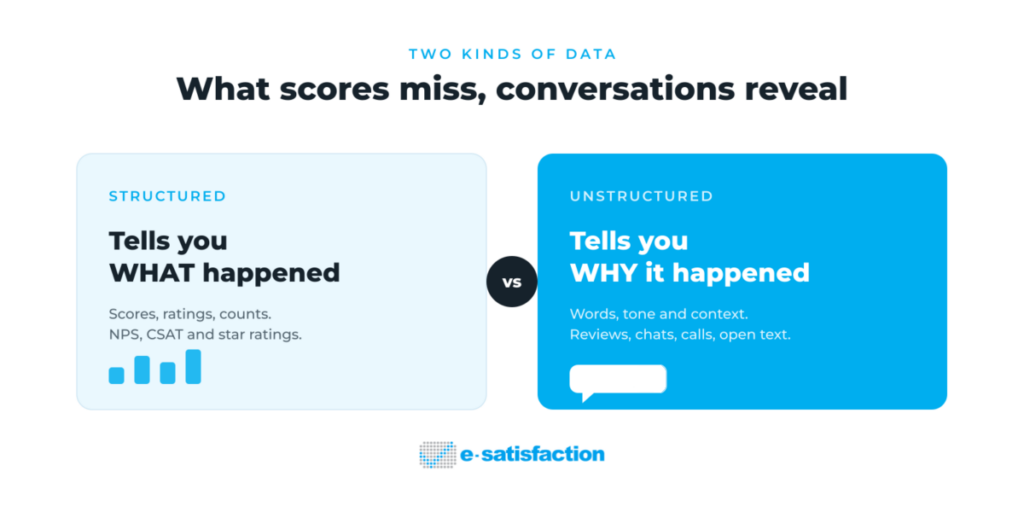
Today they don’t. Customers vent in reviews, support chats, social posts, and open comment fields. They rate you a 9 and churn anyway. And only 1 in 26 unhappy customers ever complains, so the feedback you collect is the tip of a much larger iceberg.

This post breaks down exactly where legacy programs break, and what changes when AI does the listening. If you’re rethinking your customer experience strategy, start here.

Why do traditional customer feedback programs fail?

Traditional feedback programs fail at three points: incomplete data (they hear from a small, self-selected group), slow analysis (manual tagging takes days or weeks), and a broken loop (insights rarely trigger action). Each gap quietly caps the value of everything else you do.

Fix one and the others still leak. You can run more surveys, but if you only analyze structured scores, you still miss the “why.” Speed up reporting, but if you never act, faster reporting just means faster guessing.

What is customer feedback analytics, and why does it matter now?

Customer feedback analytics is the practice of collecting feedback across channels and turning it into insight you can act on: themes, sentiment, root causes, and priorities. Done well, it tells you not just what customers scored you, but why they feel that way and what to fix first.

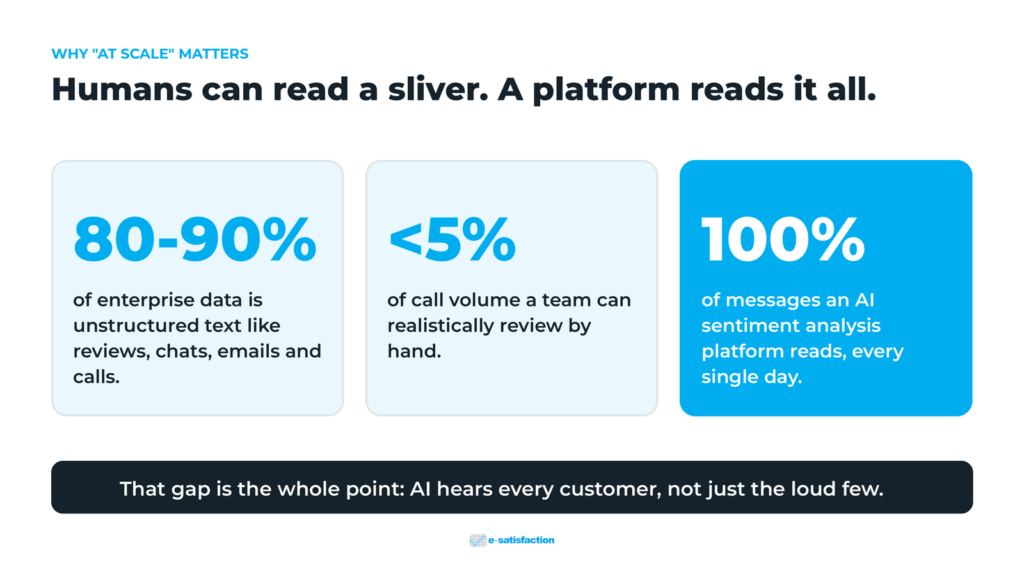
It matters more now because volume has exploded. Studies estimate that 80% to 90% of corporate data is unstructured text, the kind that manual review simply can’t keep up with. Reading a few hundred comments by hand was possible. Reading hundreds of thousands is not.

The feedback you never see is the feedback that hurts most

Here’s the uncomfortable truth: silence is not satisfaction. Most dissatisfied customers don’t file a complaint. They quietly switch, often after rating you politely on the way out.

That hidden churn is expensive. Research summarized by Harvard Business Review shows emotionally connected customers are worth far more over their lifetime than merely satisfied ones, so losing them quietly costs more than a single transaction. The early-warning signals live in unstructured feedback: a frustrated chat, a lukewarm review, a one-line comment. Ignore that text and you’re flying blind on the issues that actually drive churn.

If this sounds familiar, see how a retail brand turned feedback into action and changed what they fixed first.

Why surveys alone no longer work

Surveys still have a role, but they can’t carry the whole program. Response rates are falling, fatigue is rising, and the people who answer tend to be your biggest fans or your angriest critics. That skews scores and hides the quiet middle.

Industry coverage notes that traditional metrics like NPS and CSAT only tell part of the story as buyers spread across more touchpoints. A score tells you the temperature. It rarely tells you the cause. And when fewer people respond, even the temperature reading gets noisy.

How AI changes customer feedback analytics

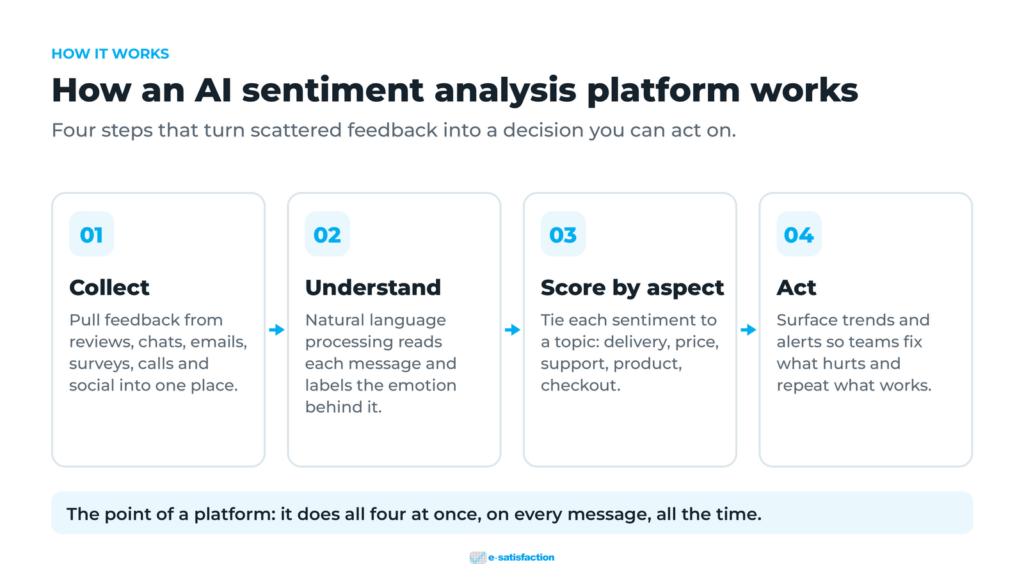
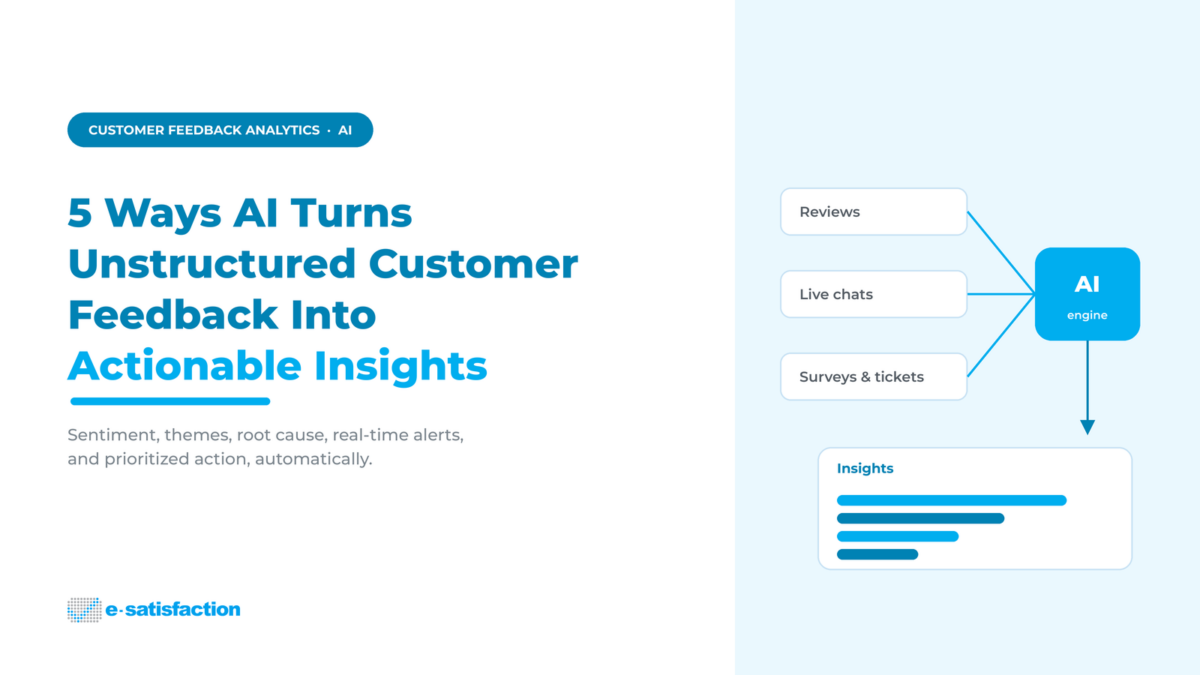
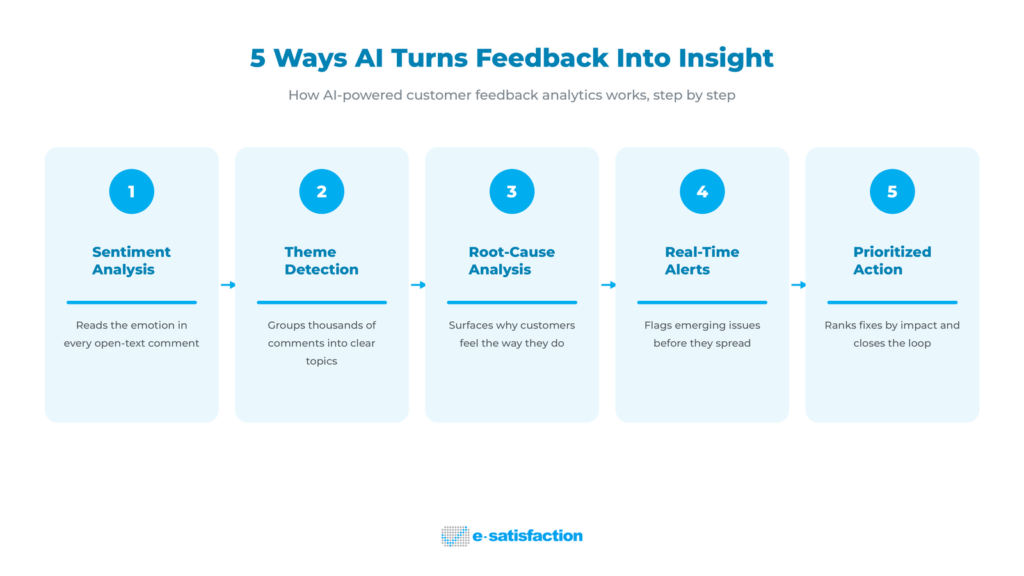
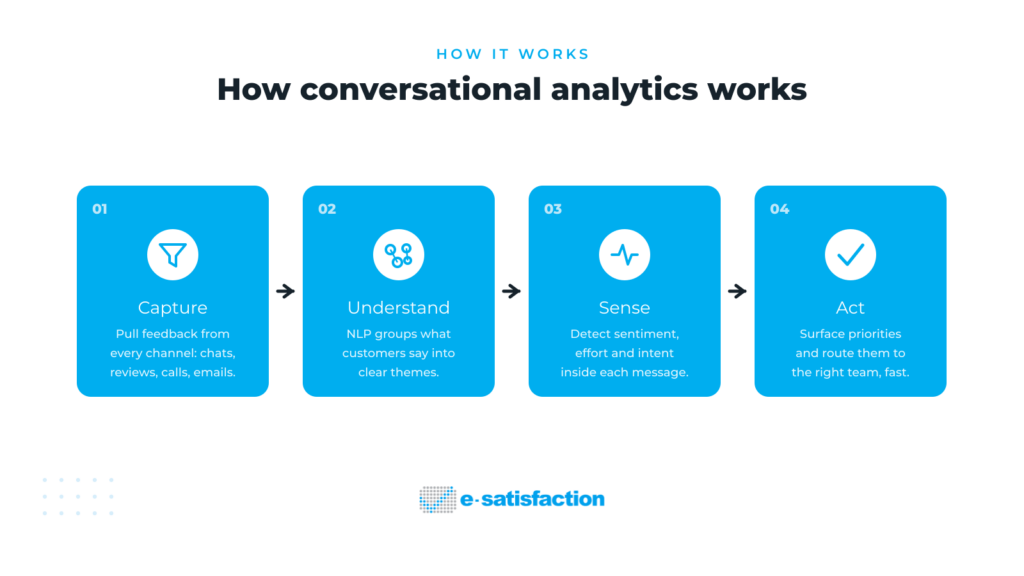
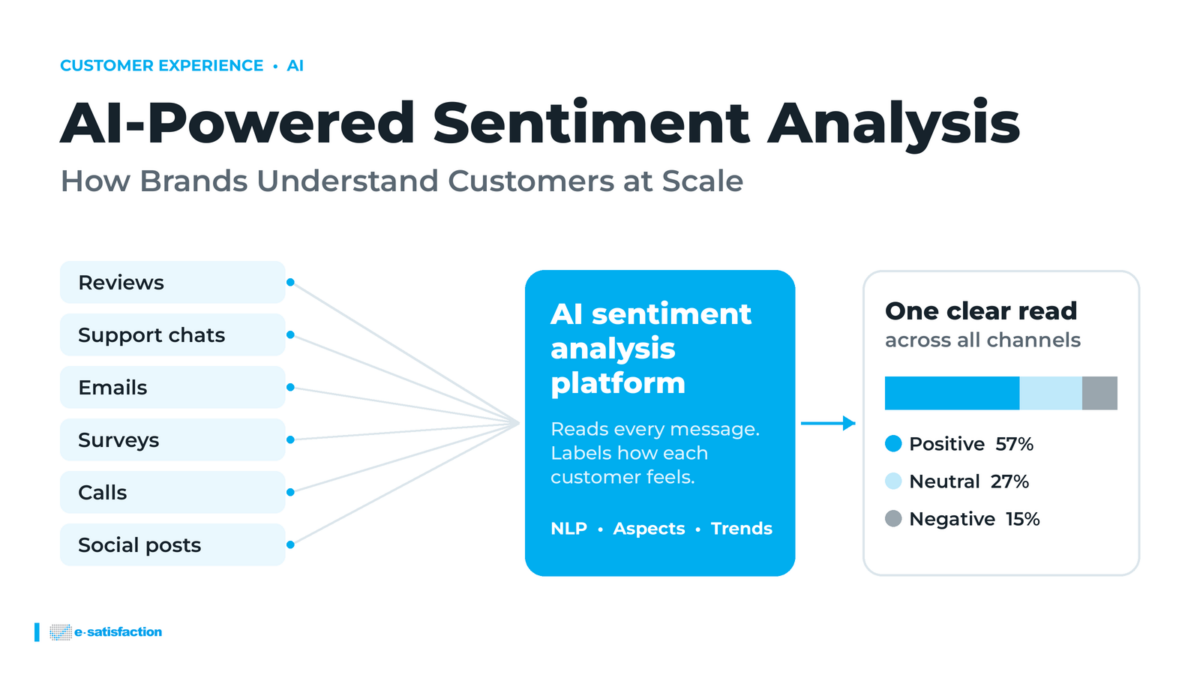
AI changes customer feedback analytics by reading unstructured text at scale, in real time. Natural language processing and customer sentiment analysis group thousands of comments into themes, flag emerging issues, and surface the root cause, all without manual tagging.

That shift does two things. It widens coverage, so you hear every channel instead of a sample. And it collapses time-to-insight from weeks to minutes. McKinsey describes AI systems that deliver continuous learning loops manual reviews could never match, including measurably shorter service interactions. See how real-time feedback analysis works in practice, and why a unified voice of customer platform beats stitching together scattered tools.

From insight to action: closing the loop

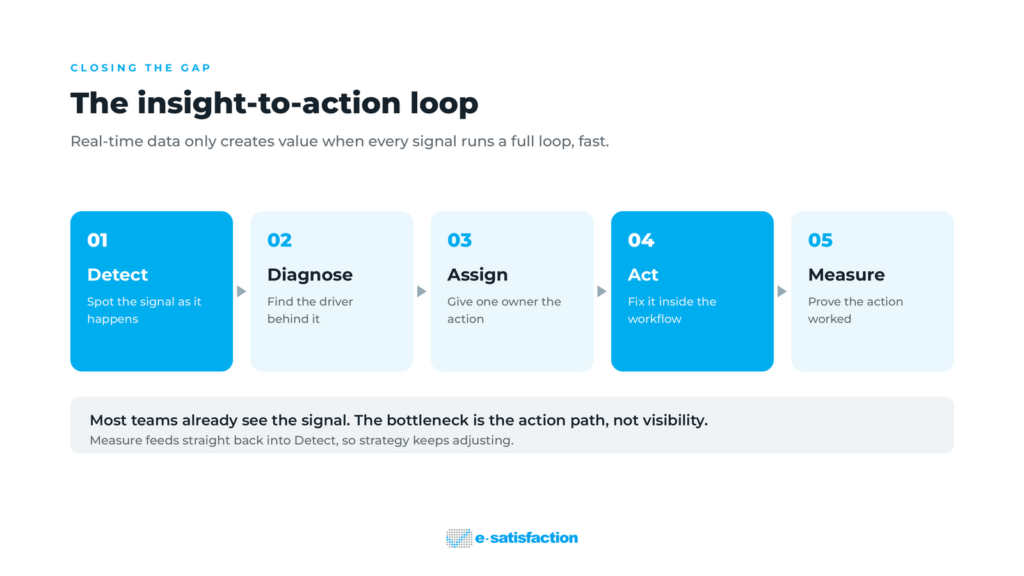
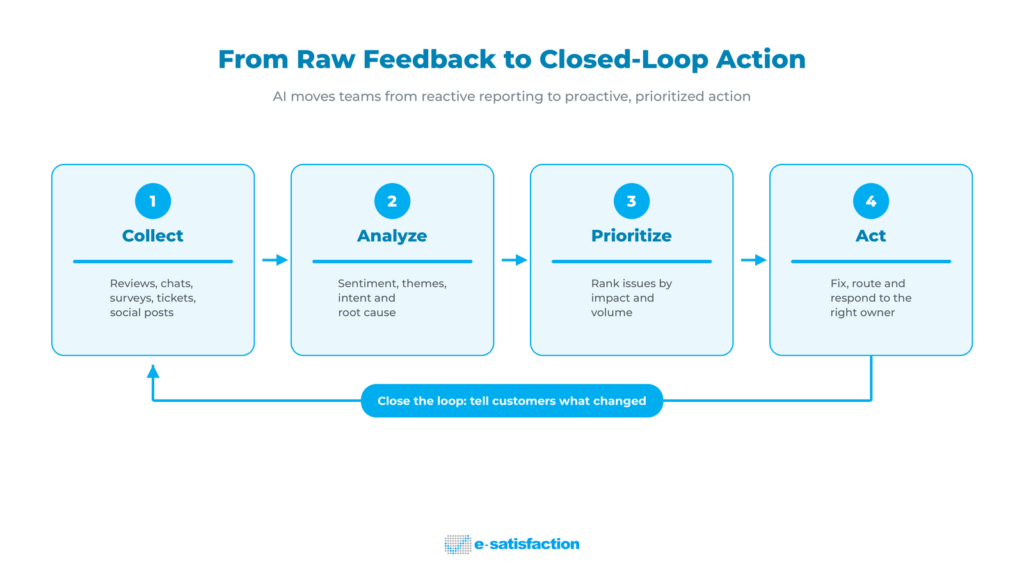
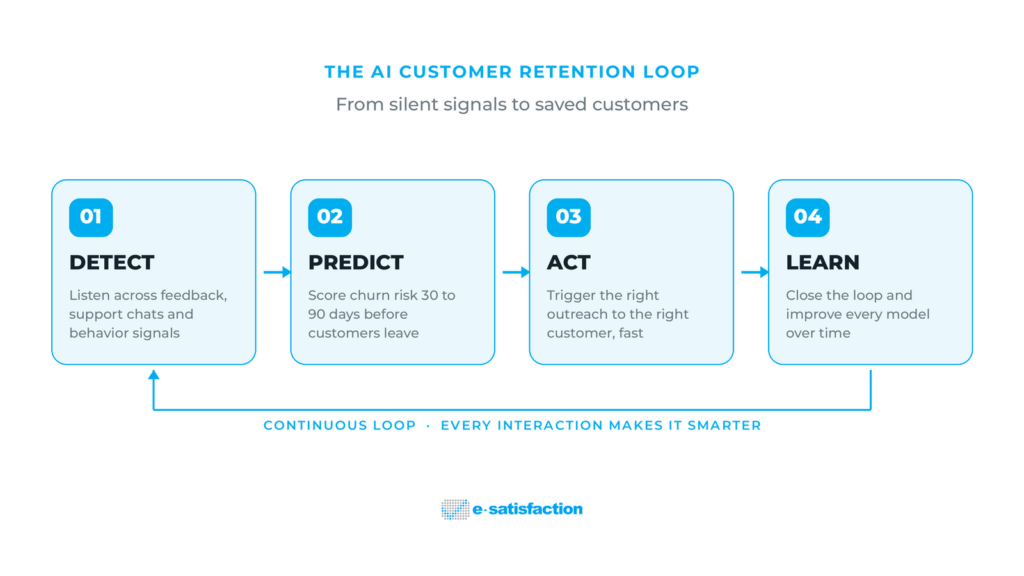
Analytics only matters if it ends in action. The strongest programs follow a simple loop: listen across every channel, analyze with AI, then act and route the result back into the next round of listening.

This is where most programs still stumble. A dashboard is not a decision. The point is to turn feedback into action, fix the highest-impact issue, follow up with the customer, and confirm the fix worked. Forward-looking teams are moving fast: industry analysts report most organizations are investing in real-time feedback systems precisely so they can close that loop sooner.

Traditional customer feedback programs don’t fail because teams stop caring. They fail because the old model can’t keep pace with how customers actually communicate. Three things change that: hearing every channel, not a sample; getting answers in real time, not weeks; and closing the loop so insight becomes action.

Get those right and feedback stops being a report you read after the fact. It becomes an early-warning system that protects revenue.

Ready to hear the silent majority before they leave? Book a demo and see your own feedback analyzed in minutes.


Frequently Asked Questions

What is customer feedback analytics?

Customer feedback analytics is the process of collecting feedback from across channels and turning it into insight you can act on, including themes, sentiment, and root causes. The goal is to understand not just what customers scored you, but why, and what to do next.

Why do most customer feedback programs fail?

They fail at three points: incomplete data from a small group of responders, slow manual analysis, and a broken loop where insights never lead to action. Most feedback is unstructured text that never gets analyzed, so the biggest issues stay hidden.

Can AI replace surveys entirely?

No. Surveys still provide useful baseline metrics like NPS and CSAT. AI broadens the picture by analyzing unstructured feedback from reviews, chats, and social, so surveys validate patterns rather than carrying the whole program alone.

How does AI analyze unstructured feedback?

AI uses natural language processing and sentiment analysis to read open-ended text at scale. It groups comments into themes, detects emotion and intent, and surfaces the root cause behind a score, in real time and without manual tagging.

What’s the difference between sentiment analysis and feedback analytics?

Sentiment analysis gauges the emotional tone of a comment, such as positive, negative, or neutral. Feedback analytics is broader: it combines sentiment with theme detection, root-cause analysis, and prioritization to guide what you actually fix.

What Is AI Voice of Customer (VoC)? A Complete Guide for Businesses

AI voice of customer is the use of artificial intelligence to collect, read, and act on customer feedback in real time. It detects sentiment, surfaces themes, and flags churn risk across every channel at once. Traditional surveys can’t keep that pace. This guide covers what AI VoC is, how it works, the benefits, and how to get started.


Most unhappy customers never tell you they’re unhappy. They just leave. Research shows only 1 in 26 unhappy customers ever complain; the rest churn in silence. That silent exit is expensive, and old feedback methods rarely catch it in time.

This is where AI voice of customer comes in. It listens to what customers say across surveys, reviews, chats, emails, and calls, then turns that raw feedback into clear, timely insight. Instead of reading a quarterly report after the damage is done, you see problems as they happen.

The shift is already mainstream. 73% of B2B SaaS product teams now use AI to synthesize customer feedback at least weekly, up from 19% in 2023. Below, we break down exactly what AI VoC is and why it matters for your business.

What Is AI Voice of Customer?

AI voice of customer is a method that uses artificial intelligence to gather and analyze customer feedback automatically. It interprets language, scores emotion, and spots patterns across thousands of responses, so teams understand what customers feel without reading every comment by hand.

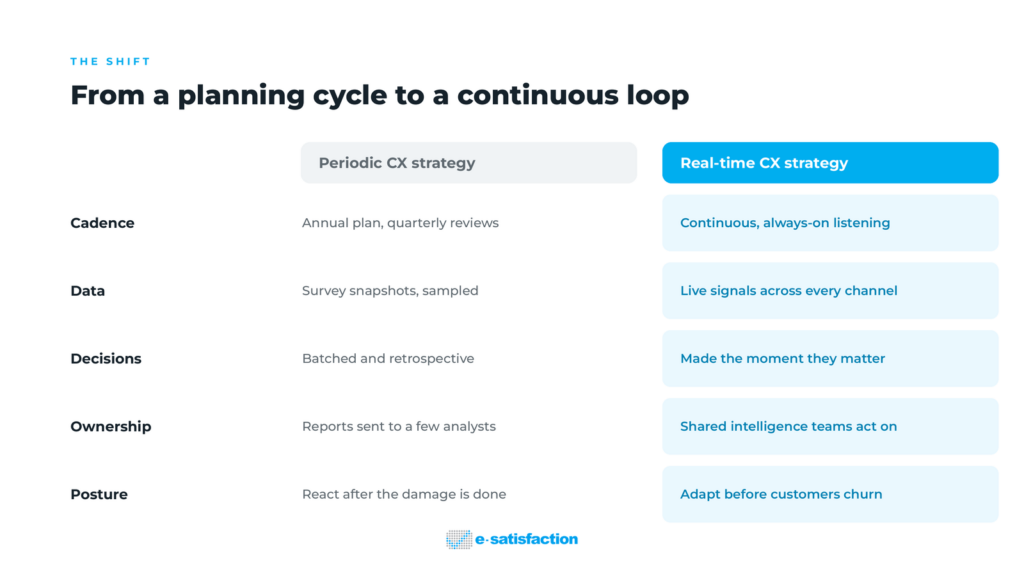
Traditional VoC relies on periodic surveys and manual tagging. AI VoC works continuously. It pulls feedback from many sources, unifies it, and produces insight in minutes instead of weeks. The goal stays the same: listen, understand, act. The speed and scale change completely.

How Does AI Voice of Customer Work?

AI voice of customer works in four steps: collect feedback from every channel, unify it in one place, analyze it with AI, and route insights to the right team. The analysis layer reads open text, scores sentiment, and groups comments into themes automatically.

Here’s each stage in practice:

  1. Collect. Feedback arrives from surveys, reviews, support tickets, chats, and social posts.
  2. Unify. All of it lands in a single view, so nothing gets lost in separate tools.
  3. Analyze. AI text analytics reads qualitative comments, detects emotion, and links themes to your CX metrics.
  4. Act. Alerts and dashboards send the right insight to frontline, product, and management teams.

The big leap is in step three. AI reads the messy, open-ended comments that humans usually skip, and it does so across languages and channels at once.

Why Does Traditional VoC Fall Short?

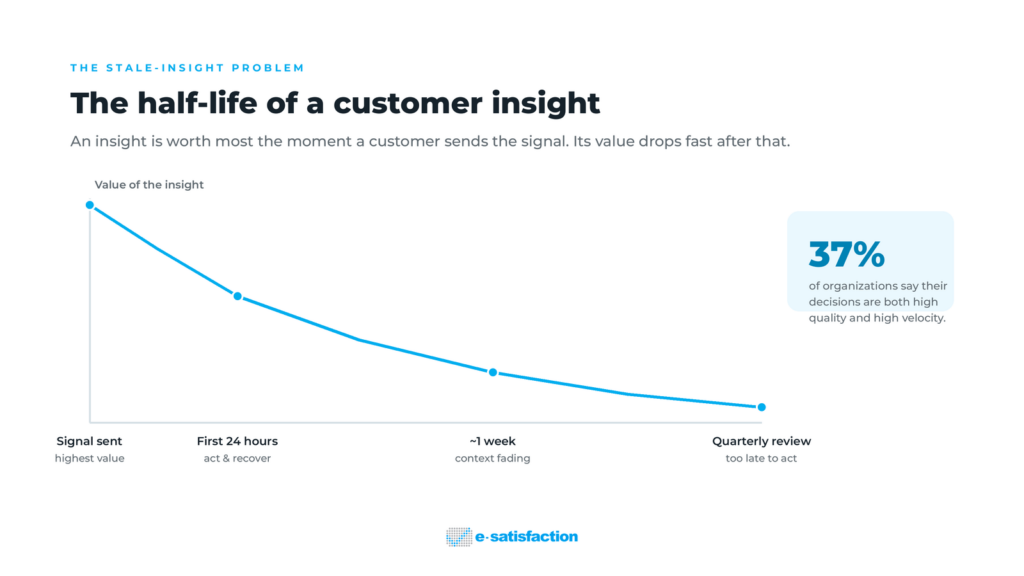
Traditional VoC programs were built for a slower world. They lean on quarterly surveys, small samples, and analysts who tag comments by hand. By the time a report lands, the customer has often already moved on.

Three gaps stand out. First, timing: insights arrive too late to fix anything. Second, scale: teams review only a tiny fraction of available feedback. Third, depth: rich open-text comments get ignored because manual tagging is slow. AI closes all three gaps by reading everything, instantly, in the customer’s own words.

What Are the Benefits of AI VoC for Businesses?

The main benefits of AI VoC are real-time insight, churn prediction, lower manual effort, and measurable revenue gains. Because AI processes feedback as it arrives, teams act on problems early instead of reviewing them months later.

The numbers back this up:

If silent churn and slow reports sound familiar, see how brands turn feedback into action before customers walk away.

What Can AI Analyze in Customer Feedback?

AI can analyze sentiment, emotion, recurring topics, and key drivers inside customer feedback. It reads free text, classifies each comment, and shows which issues most affect satisfaction, loyalty, and revenue, all without manual review.

In practice, that means four layers of insight. Sentiment tells you if a comment is positive or negative. Emotion detection picks up frustration or delight in the wording. Topic detection groups thousands of comments into clear themes. Key driver analysis then ranks which themes move your scores most. The momentum is real: 79% of leaders expect generative AI to transform their organizations within three years, with customer operations a top value area.

How to Get Started With AI Voice of Customer

Starting with AI VoC does not require a full system overhaul. Begin small, then expand based on what works.

Follow a simple path. Connect your existing feedback sources first, since you likely already collect more than you analyze. A good platform can connect every feedback channel you use, online and offline. Next, let AI handle the analysis so themes and sentiment surface automatically. Then close the loop: send insights to the teams who can act, and track whether your scores improve. Done well, this loop helps you improve customer experience continuously rather than once a quarter.

The Bottom Line

AI voice of customer turns scattered, slow feedback into real-time insight you can act on. It reads what customers actually say, predicts who might leave, and points teams toward the fixes that matter most.

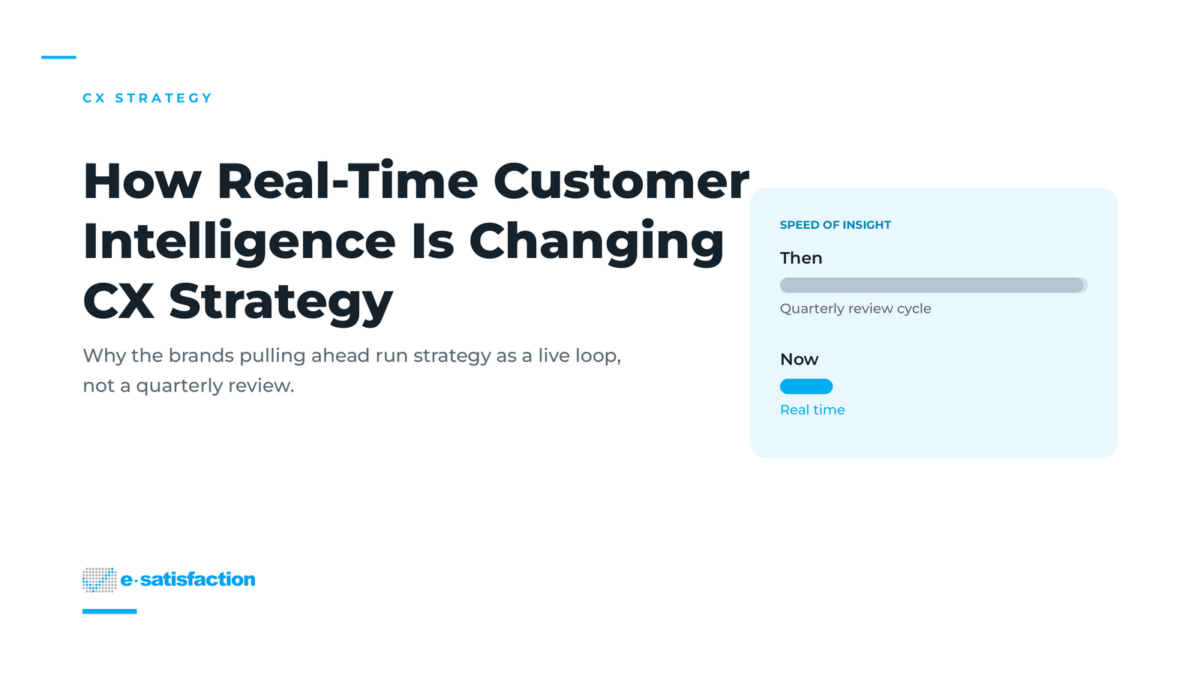
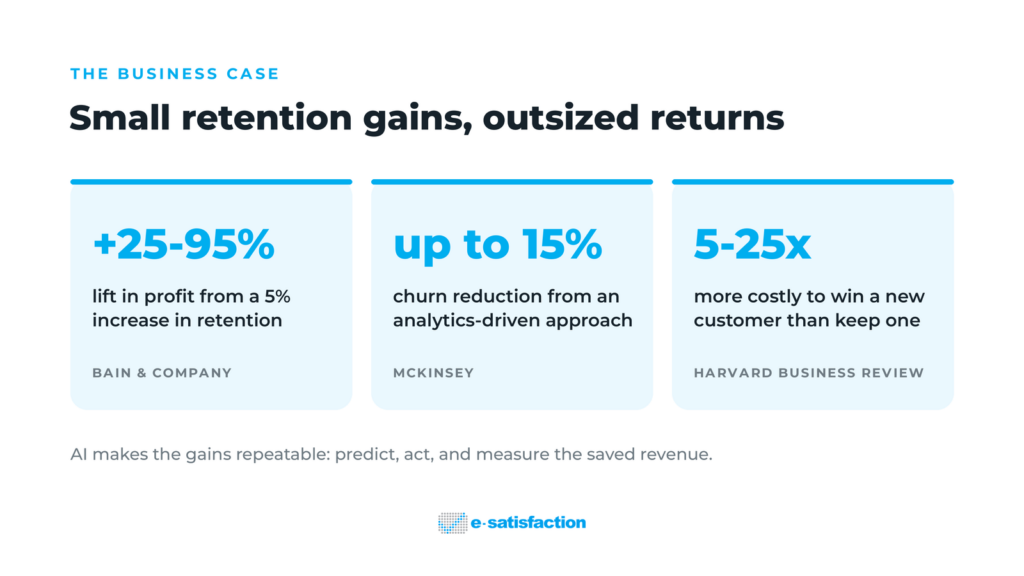
Two takeaways. First, silent churn is the real threat, and AI is the only practical way to catch it at scale. Second, the brands pulling ahead already treat feedback as a live signal, not a quarterly report. Companies that act on feedback see up to a 25% reduction in churn.

Ready to stop guessing and start acting on real customer feedback? Request a free demo of our AI-powered VoC platform.


Frequently Asked Questions

What is AI voice of customer?

AI voice of customer is the use of artificial intelligence to collect, analyze, and act on customer feedback automatically. It reads sentiment, detects themes, and highlights issues across surveys, reviews, chats, and calls in real time, so teams can respond before customers churn.

How is AI VoC different from traditional VoC?

Traditional VoC relies on periodic surveys and manual tagging, so insights arrive late and cover only a small sample. AI VoC runs continuously, reads open-text feedback at scale, and delivers insight in minutes. The purpose is the same; the speed and coverage are far greater.

Is AI accurate at reading customer sentiment?

Modern AI sentiment analysis is reliable enough to guide business decisions and improves as it learns your data. It also removes the bias and fatigue that affect manual review. Most teams use it to prioritize where humans should focus, not to remove human judgment entirely.

Does AI VoC replace customer surveys?

No. Surveys remain a valuable feedback source. AI VoC simply analyzes survey responses faster and combines them with reviews, chats, and other channels for a fuller picture. Think of AI as the analysis engine that makes every survey more useful.

How do I start an AI VoC program?

Start by connecting the feedback channels you already use, then let AI analyze sentiment and themes automatically. Route those insights to the teams who can act, and track whether your CX metrics improve. Begin with one or two channels and expand from there.

7 Customer Experience Problems AI Solves Better Than Traditional Methods

AI customer experience solutions now beat traditional methods on the work that slows teams down: instant replies, reading every piece of feedback, personalizing at scale, predicting churn, keeping quality consistent, cutting time-to-insight, and clearing routine tickets. Humans still win on complex, emotional moments. This post breaks down all seven, with the data behind each one.


Most unhappy customers never tell you. They just leave. Around 74% have stopped doing business with a brand after one frustrating experience. Traditional CX methods, like manual surveys, sampled reviews, and business-hours support, rarely catch the problem before it costs you the customer.

AI customer experience solutions close that gap. They handle the speed, scale, and pattern-spotting that human teams can’t manage alone. They don’t replace your people. They remove the grunt work so your people can focus on what matters.

Adoption has already crossed the line: 88% of contact centers now use some form of AI. The question isn’t whether to use it. It’s knowing where AI actually beats the old way, and where it doesn’t.

Here are seven customer experience problems AI solves better than traditional methods, with the data behind each. A modern customer experience platform ties them together.

How do AI customer experience solutions cut response times?

AI answers instantly, around the clock, with no queue. Traditional support runs on business hours and waiting lines. That single shift moves first response from hours to minutes and resolves routine issues in seconds, which is often the difference between a kept customer and a lost one.

Across industries, AI has cut first response times from over six hours to under four minutes, and resolution times from 32 hours to 32 minutes. Some systems go further: Bank of America’s assistant resolves 98% of queries in 44 seconds. Speed matters because frustration builds while customers wait.

Can AI read customer feedback better than people can?

Yes, at scale. AI reads thousands of open-ended comments in seconds and sorts them into themes, sentiment, and intent. Manual review can only sample a fraction. AI processes everything, so no signal gets lost in the pile.

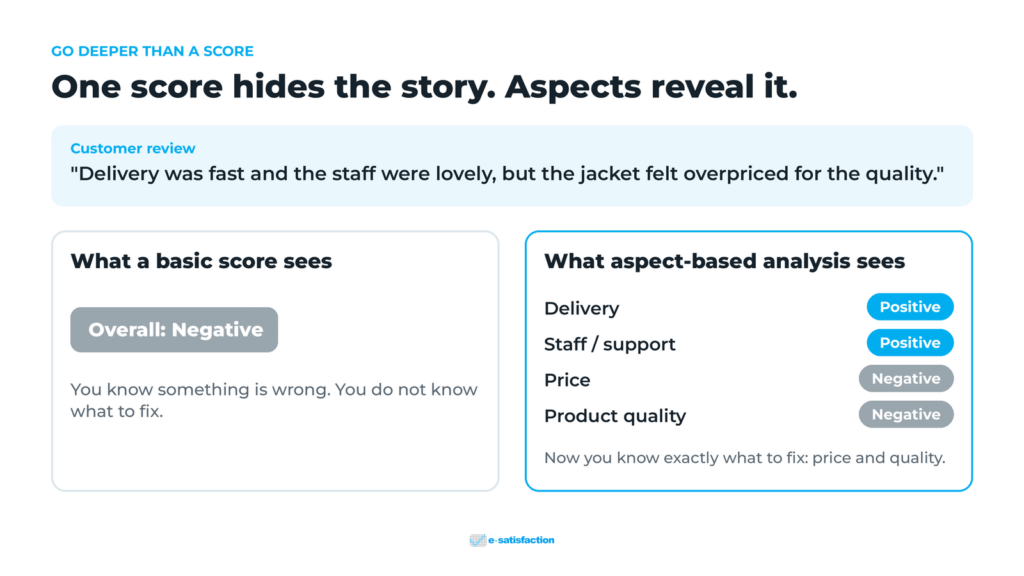
Natural language models turn unstructured comments from surveys, tickets, chats, and reviews into structured insight. The big win is scale: it processes thousands of open-text responses in seconds and finds patterns manual review misses. Aspect-based sentiment goes past positive or negative to pinpoint the exact feature causing frustration and flag churn signals early. This is the engine behind tools like AI-powered topic detection. New to this? Start with what customer feedback actually tells you.

Personalization at a scale humans can’t reach

Customers expect you to know them. 71% expect personalized interactions, and brands that deliver see around 20% higher satisfaction and conversion. Traditional personalization stops at broad segments: age, location, last purchase.

AI works at the level of the individual. It reads behavior, history, and sentiment together, then tailors the next message, offer, or reply in real time. 80% of executives already use AI in their strategy and business decisions. The result feels less like marketing and more like being remembered.

Can AI predict churn before a customer leaves?

Yes. AI scores churn risk from behavior signals, like fewer logins or rising support tickets, before the customer decides to go. Traditional methods rely on exit surveys, which only tell you why someone already left. Prediction lets you act while you still can.

Bad experiences put roughly 6.7% of revenue at risk, about $3.8 trillion globally. In research settings, AI churn models reach around 95% accuracy. The point isn’t the score. It’s the early warning that triggers a save before the relationship ends.

If this sounds familiar, see how brands like yours have fixed it.

Consistent service across every channel and agent

Quality used to depend on which agent picked up or which channel a customer chose. Manual QA only checks a tiny sample of conversations, so most slip by unreviewed.

AI analyzes every interaction and gives agents real-time guidance mid-conversation. That keeps the experience steady whether a customer emails on Monday or calls on Friday. Consistency is quiet, but customers notice when it’s missing.

How AI customer experience solutions speed up time-to-insight

AI delivers insight in real time instead of quarterly reports. It unifies feedback from surveys, reviews, tickets, and calls into one live view. Traditional reporting leaves data in silos and arrives too late to act on. Faster insight means faster fixes.

Scores like NPS tell you where you stand; sentiment analysis tells you why, and what to fix. When a score dips, AI links it to the exact cause, like “checkout wait time,” so operations knows where to look. That turns reporting into actionable VoC insights you can use the same day, built on a clear Voice of Customer framework.

Freeing your team from repetitive work

By 2026, AI is expected to fully handle about 80% of routine interactions, like order tracking and basic troubleshooting. That’s not a threat to your team. It’s a relief.

When AI clears repetitive tickets, agents spend their time on complex, emotional cases where humans win. 77% of customers get better outcomes when they deal with a person on hard problems. The best setup pairs AI speed with human judgment. 92% of businesses report higher satisfaction after adding AI support, but only when humans stay in the loop.

The takeaway

AI customer experience solutions aren’t magic, and they don’t replace your people. They win on the work that overwhelms human teams: speed, volume, prediction, and consistency. Humans still own the moments that need empathy and judgment.

Three things to remember. First, AI’s edge is scale and speed, so use it where volume is the bottleneck. Second, prediction beats reaction; catch churn signals before customers leave. Third, the strongest CX programs blend AI and people, not one or the other. The market reflects this: AI customer service is worth about $15.12 billion in 2026, with an average return of $3.50 for every $1 invested.

Ready to stop guessing and start acting on real customer feedback? Request a free demo


Frequently Asked Questions

What are AI customer experience solutions?

AI customer experience solutions are tools that use natural language processing, machine learning, and generative AI to automate and improve customer interactions. They analyze feedback, predict behavior, personalize messaging, and handle routine support at a scale humans can’t match.

Will AI replace human customer service agents?

No. AI handles routine, high-volume tasks, but customers still prefer humans for complex issues. 77% report better outcomes with a person on hard problems. The strongest teams pair AI speed with human judgment.

How does AI analyze customer feedback?

AI reads unstructured text from surveys, reviews, tickets, and chats, then sorts it into themes, sentiment, and intent in seconds. It surfaces the exact issues driving low scores, something manual sampling usually misses.

Can small e-commerce brands use AI customer experience solutions?

Yes. Many platforms scale to any feedback volume without adding headcount, so a brand collecting feedback from five stores or five hundred gets the same real-time analysis.

How fast is the ROI on AI customer experience solutions?

Returns are strong when implemented well. Companies see an average of $3.50 back for every $1 invested in AI customer service, with leaders reaching up to 8x.

The Future of Customer Experience: Predictive, Personalized, and AI-Driven

The future of customer experience is predictive, personalized, and AI-driven. Brands are shifting from reacting to problems toward preventing them, from generic messaging toward tailored journeys, and from manual analysis toward AI that reads every customer signal. This post breaks down the three shifts, the data behind them, and how to prepare without losing the human touch.


The future of customer experience belongs to brands that stop reacting and start anticipating. The experimentation phase with AI is over. McKinsey’s global AI survey found 88% of organizations now use AI in at least one business function, up from 78% the year before. In customer-facing work, that shift is already changing what people expect from every interaction.

Customers now expect brands to know them, help before they ask, and respond in seconds. Meeting that bar by hand is no longer possible. Three forces are reshaping the field: prediction, personalization, and AI. Each is useful alone. Together, they redraw the map. Let’s look at what that future means, and how to prepare.

What Does the Future of Customer Experience Look Like?

The future of customer experience is proactive, individual, and machine-assisted. Brands will predict needs before customers voice them, tailor each journey to the person, and use AI to read feedback at a scale humans cannot match. The reactive, one-size-fits-all model is ending.

That plays out as three shifts. For years, most CX teams worked backward. They waited for a survey score to drop, a complaint to land, or churn to show up in a report. By then the customer had already decided. The next era flips that order. The smartest teams are building the data and AI in customer experience capabilities to move from scorekeeping to problem-solving.

This is also why old feedback habits are breaking down. Many programs still lean on slow, sampled surveys that miss most of what customers feel. We covered this in detail in why traditional customer feedback programs fail without AI.

From Reactive to Predictive: Service That Fixes Problems First

Predictive CX uses data and AI to spot issues before customers report them. Instead of waiting for a complaint, brands flag a stalled order, a confused checkout, or a frustrated tone in real time. The goal is simple: solve the problem before it becomes a reason to leave.

This shift is already named by analysts. Gartner identifies proactive issue prevention as a defining trend reshaping customer service through 2028, with AI predicting service issues before they occur. The focus moves from managing demand to creating value.

Prediction depends on listening to weak signals. A drop in tone, a repeated question, a hesitation at payment: each is a clue. AI reads these patterns across thousands of interactions at once. We broke down exactly how this works in how AI detects customer frustration before it escalates, where AI sentiment analysis turns raw emotion into an early warning.

Why Does Personalization Matter More Than Ever?

Personalization means shaping each experience around the individual: their history, their context, their intent. It is no longer a nice extra. It is the baseline customers expect, and the gap between brands that do it well and those that fake it is widening fast.

The business case is strong. McKinsey reports that personalization can cut customer acquisition costs by up to 50%, lift revenues by 5 to 15%, and raise marketing ROI by 10 to 30%. Faster-growing companies pull 40% more of their revenue from personalization than slower peers.

Yet most brands overrate themselves. Research shows 85% of companies believe they personalize well, but only 60% of customers agree, and 76% feel frustrated when personalization is missing. Closing that gap starts with real data, not guesses. Strong customer feedback analytics tells you what each segment actually wants, so tailoring is grounded in evidence.

Personalization at this level is hard to run on instinct. If your team is still stitching insights together by hand, see how purpose-built AI customer experience solutions turn scattered signals into tailored action.

How Is AI Changing the Way Brands Listen to Customers?

AI lets brands hear every customer, not just the few who answer a survey. It reads chats, calls, reviews, and open comments in their own words, then surfaces themes, sentiment, and intent. Listening shifts from a sample to the whole conversation.

This is the engine behind both prediction and personalization. Without it, the other two shifts stall. Modern AI Voice of Customer tools turn unstructured feedback into structured, ranked insight in near real time. That is the difference between knowing a score and knowing why it moved.

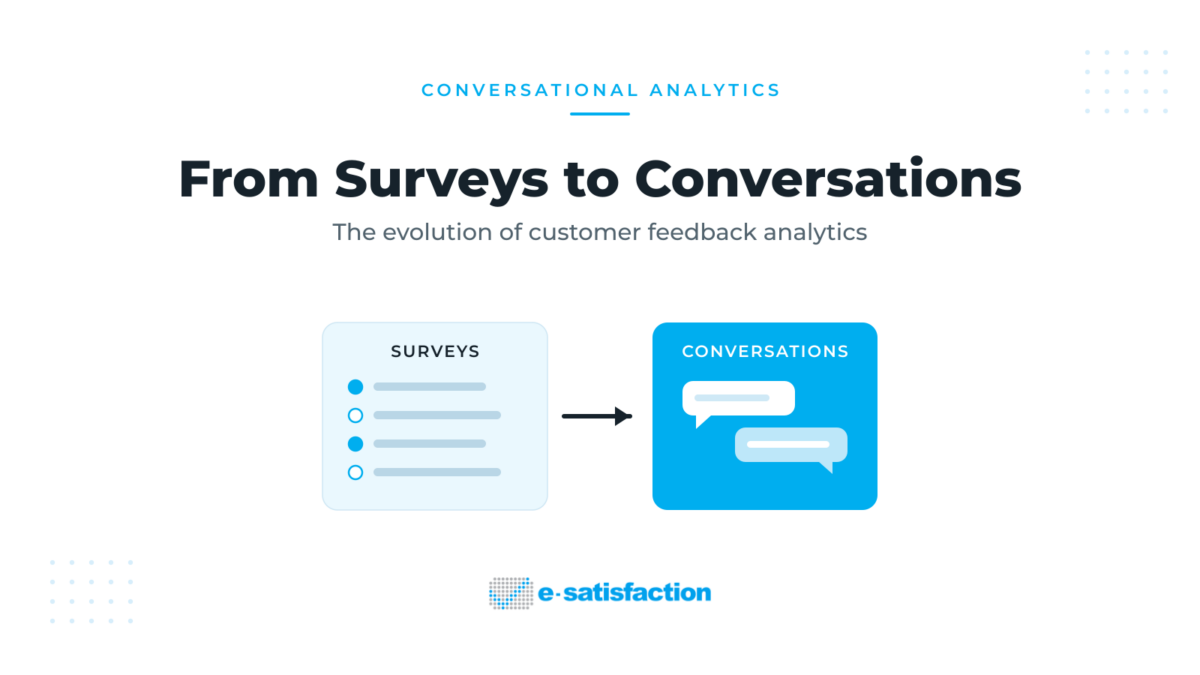
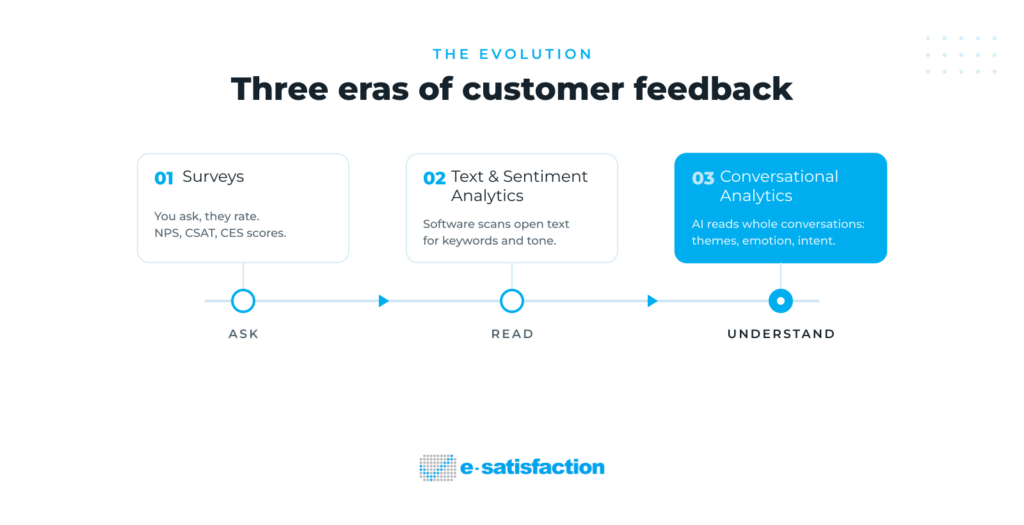
Free-text feedback used to sit unread because no team could process it at scale. Now conversational analytics reads it automatically. We traced this shift in from surveys to conversations: the evolution of customer feedback analytics, which shows why always-on listening is replacing the annual survey.

The Rise of Agentic AI in Customer Experience

The next wave is agentic AI: systems that do not just answer but act. Gartner predicts agentic AI will autonomously resolve 80% of common customer service issues by 2029. These agents can navigate a process, update a record, or resolve a request end to end.

Adoption is real but still early, which favors movers who prepare now. The pressure is clear: a Gartner survey found 91% of customer service leaders are under pressure to implement AI. The winners will pair automation for speed with human judgment for everything that needs care.

Will AI Replace the Human Touch in CX?

No. The future of customer experience is humans empowered by AI, not humans removed from it. AI handles scale, speed, and pattern-spotting. People handle empathy, trust, and the hard calls. Hand emotional moments to a bot and satisfaction drops fast.

The risk is moving too quickly. Forrester warns that over-automating complex, emotional inquiries will frustrate customers and erode satisfaction, even as simple self-service improves. Trust is now measurable, and poorly built AI can spend it quickly.

That is why the strongest 2026 strategies treat AI as an amplifier of human judgment. Forrester’s CX predictions urge teams to shift from measurement without meaning toward advanced analytics and real problem-solving. The technology earns its place only when it makes the human experience better.

The Takeaway

Three points are worth keeping.

The future of customer experience is built on prediction, personalization, and AI working together. Each shift reinforces the others, and the brands that combine all three will pull ahead. It is also a data problem before a technology one, since you cannot predict or personalize what you cannot hear.

The brands that win will not be the ones with the most customer data. They will be the ones that act on it the fastest, with people and AI playing to their strengths. Ready to see your own feedback turned into predictive, personalized action? Book a demo and explore what AI in customer experience can do for your team.


Frequently Asked Questions

What is the future of customer experience?

The future of customer experience is predictive, personalized, and AI-driven. Brands move from reacting to problems toward preventing them, from generic outreach toward individual journeys, and from manual analysis toward AI that reads every signal. Human judgment stays central for empathy and complex decisions.

What is predictive customer experience?

Predictive customer experience uses data and AI to anticipate a customer’s needs or problems before they are voiced. It spots early signals, like a stalled checkout or a frustrated tone, and lets teams act in real time. The aim is to resolve issues before they cause churn.

How does AI improve personalization in CX?

AI analyzes each customer’s history, behavior, and feedback to tailor content, offers, and support in real time. Done well, this can lower acquisition costs, lift revenue, and raise marketing ROI. The key is grounding it in real feedback data rather than broad assumptions.

Will AI replace human customer service agents?

No. AI will handle routine, high-volume tasks and surface insight, while people focus on empathy, trust, and complex cases. Analysts caution that over-automating emotional interactions frustrates customers, so the strongest model is humans empowered by AI, not replaced by it.

How should brands prepare for an AI-driven CX future?

Start with listening. Build the ability to capture and analyze all customer feedback, not just survey samples, then layer prediction and personalization on top. Pair automation with clear human oversight, and treat trust and transparency as core parts of the design.

Why AI in Customer Experience Is No Longer Optional

AI in customer experience has shifted from a nice-to-have to a baseline expectation. Customers now demand fast, personal, consistent service across every channel. AI helps brands listen at scale, predict churn, and act on feedback in real time. The brands that wait risk losing customers who quietly leave for someone faster.


Customer expectations have outgrown what manual teams can deliver. People want answers in seconds, service that remembers them, and offers that fit their needs. AI in customer experience is how modern brands meet that bar without burning out their teams. It is no longer a futuristic add-on. It is becoming the engine behind everyday CX.

The pressure is real.McKinsey research found 71% of consumers expect personalized interactions, and 76% get frustrated when they don’t get them. Surveys alone can’t keep up with that demand. They reach a fraction of customers and arrive too late to fix anything. This is the gap AI fills. Below, we break down what AI in CX really means, why expectations are forcing the change, and where it pays off.

What Does AI in Customer Experience Actually Mean?

AI in customer experience means using machine learning to listen, understand, predict, and respond to customers at scale. It reads every piece of feedback, spots patterns humans miss, flags at-risk customers, and powers personal interactions across channels. It works alongside teams, not instead of them.

In practice, AI in CX shows up in four ways. It analyzes feedback and reviews to find themes. It personalizes recommendations and messages. It predicts behavior like churn or repeat purchase. And it automates routine support so people can focus on harder problems. Most brands start with one and expand. A solid Voice of Customer framework ties these pieces together so insights flow into action instead of sitting in a dashboard.

Why Are Customer Expectations Forcing the Shift?

Customers now compare every brand to the best digital experience they’ve ever had. They expect speed, memory, and relevance by default. When a brand can’t deliver, they leave quietly and rarely explain why. AI helps brands meet that standard at a scale humans cannot match alone.

The data backs this up. Personalization is no longer a perk. McKinsey found that strong personalization can lift revenue by 5% to 15% and cut acquisition costs by as much as 50%. Doing that across thousands of customers by hand is impossible. AI makes it routine. It tailors content, timing, and offers based on real behavior, then learns and improves with each interaction.

How Does AI Turn Customer Feedback Into Action?

AI turns feedback into action by reading 100% of comments, reviews, and survey responses, then grouping them into clear themes with a sentiment score. Instead of skimming a sample, teams see the full picture in minutes and know exactly which issues hurt loyalty most.

This is the biggest leap over old methods. Traditional surveys capture a small slice of customers and miss the “why” behind the score. AI reads open-text feedback, detects emotion, and surfaces the root cause. A negative trend in checkout, a recurring delivery complaint, a product flaw: all of it becomes visible fast. The point is not the analysis itself but what follows. The strongest programs turn feedback into action by routing each insight to the team that can fix it and closing the loop with the customer.

If this sounds familiar, you don’t have to start from scratch. See how brands have already done this by turning unhappy customers into a clear action plan.

Can AI Predict Churn Before Customers Leave?

Yes. AI predicts churn by spotting early warning signals in behavior and feedback, such as falling engagement, rising complaints, or souring sentiment. It flags at-risk customers while there is still time to act, so teams can intervene before the customer is gone.

Most churn happens silently. Unhappy customers rarely complain; they just stop coming back. AI changes the timeline by watching the signals that come before a customer leaves. When the model flags risk, the right team can reach out with a fix or an offer. This is the shift from reacting to problems to preventing them. Pairing predictive models with how real-time feedback works lets brands catch issues at the exact moment they form.

The Personalization and Automation Payoff

The return on AI in CX is both financial and operational. On the customer side, faster answers and relevant offers raise satisfaction and loyalty. On the team side, automation handles routine questions so agents can spend time where empathy and judgment matter.

The market is moving fast. A 2026 industry report found that 78% of organizations expect AI agents to handle at least half of customer support interactions within 18 months, and most report measurable gains in retention. Analysts also see AI moving from automation toward anticipation, where systems act before a customer even asks. The goal is not to remove people. It is to free them for the moments that build real relationships. A connected customer experience platform keeps the human and the automated working from the same data.

Where AI in CX Goes Wrong

AI is not a magic fix. It fails when data sits in silos, when automation replaces human care in sensitive moments, or when personalization crosses into feeling intrusive. The brands that win treat AI as a tool for better human decisions, not a way to remove humans.

Trust is the line to watch. Research shows customers are comfortable with AI for routine tasks but far more cautious with sensitive or high-stakes decisions. Push too far and you erode the loyalty you were trying to build. Clean, unified data and clear handoffs to people keep AI helpful instead of harmful. The strategy matters more than the algorithm.

The Bottom Line

AI in customer experience has crossed from optional to essential. Three things are clear. Customers expect personal, fast, consistent service, and they leave quietly when they don’t get it. AI lets brands listen to everyone, predict problems, and act in real time. And the technology only works when it supports human judgment, not replaces it.

The brands pulling ahead are not waiting for AI to be perfect. They are using it now to understand customers better and fix issues faster. The cost of standing still is customers you never hear from again.

Ready to stop guessing and start acting on real customer feedback? Request a demo and see how it works for your brand.

Frequently Asked Questions

What is AI in customer experience?

AI in customer experience is the use of machine learning to listen to, understand, predict, and respond to customers at scale. It analyzes feedback, personalizes interactions, predicts behavior like churn, and automates routine support so teams can focus on complex needs.

Why is AI becoming essential for CX?

Customer expectations now outpace what manual teams can deliver. People want fast, personal, consistent service across every channel. McKinsey found 71% of consumers expect personalized interactions and 76% get frustrated without them. AI is the only practical way to meet that demand at scale.

Can AI really reduce customer churn?

Yes. AI detects early signals of churn, such as falling engagement or negative sentiment, often before a customer complains or leaves. This lets teams step in with a fix or offer while there is still time, shifting the focus from reacting to preventing.

Does AI replace human customer service teams?

No. AI handles routine, repetitive tasks and surfaces insights, but human judgment and empathy still matter most in sensitive moments. The strongest CX programs use AI to support people, not to replace them.

What is the risk of using AI in customer experience?

The main risks are siloed data, over-automation in sensitive situations, and personalization that feels intrusive. Customers trust AI for routine tasks but stay cautious with high-stakes decisions. Unified data and clear handoffs to humans keep AI helpful.