
Enhancing User Experience: Best Practices for In-App Surveys

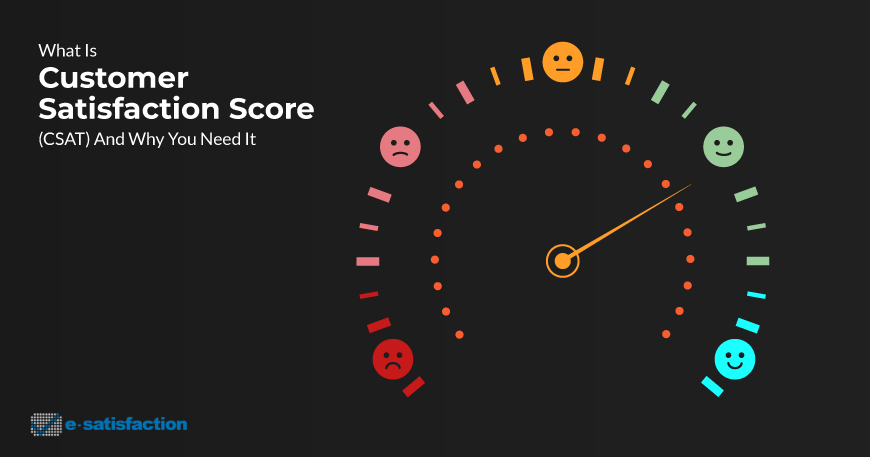
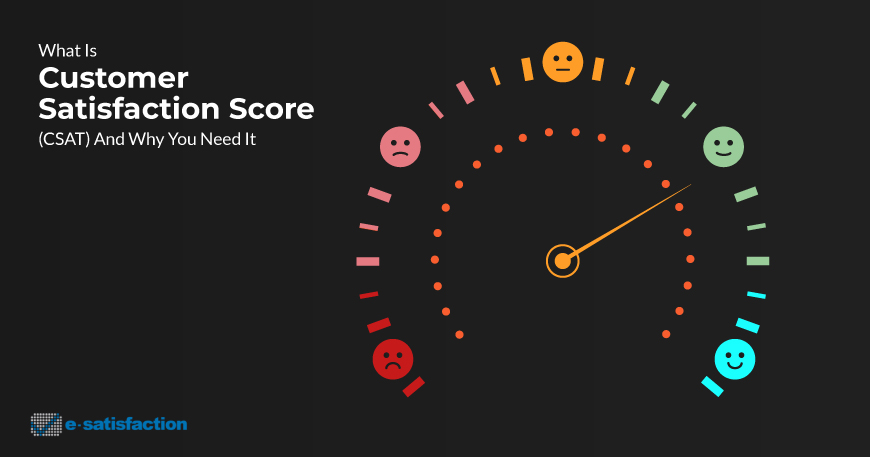
Customer Satisfaction: the holy grail for any brand/business that wants to offer high-quality products/services/experiences to its audience. If you’ve been doing some research on how to measure customer satisfaction, you have probably stumbled upon CSAT. Now it’s time you get better acquainted with this metric and discover why it is widely used and trusted.

User feedback is invaluable for app developers and product teams seeking to improve their offerings. In-app surveys are a powerful tool to gather insights directly from users, but designing them effectively is key to obtaining meaningful and actionable feedback. Let’s explore some best practices to consider when implementing in-app surveys.

Best Practices for In-App Surveys

1. Keep it Short and Simple:

One cardinal rule of in-app surveys is to keep them short and simple. Users are more likely to participate if the survey is quick and doesn’t feel like a burdensome task.

  • Minimize the number of questions to prevent survey fatigue.
  • Use concise and clear language to make it easy for users to understand.

2. Timing is Key:

Timing is crucial when it comes to triggering in-app surveys.

  • Trigger the survey at an appropriate moment, such as after a user completes a key action or achieves a milestone within the app.
  • Avoid interrupting critical tasks or bombarding users with surveys.

3. Offer Incentives:

Consider offering users incentives for participating in the survey. This could be in the form of discounts, access to exclusive content, or early access to new features. Incentives not only boost participation but also show users that their input is valued.

4. Personalization:

Personalization goes a long way in making users feel heard and understood.

  • Tailor survey questions based on user behavior or preferences.
  • Use variables like the user’s name to make the survey feel more personalized.

5. Use a Mix of Question Types:

Use a mix of question types. This approach provides a comprehensive view of user opinions and allows for both quantitative and qualitative analysis.

  • Combine multiple-choice, rating scales, and open-ended questions to gather both quantitative and qualitative data.

6. Prioritize Important Questions:

Place the most critical questions early in the survey to capture user attention. If users drop out, you still get feedback on the most crucial aspects.

7. Mobile-Friendly Design:

Optimize the survey for mobile devices to enhance the user experience. Use responsive design to ensure the survey is accessible on various screen sizes.

8. Testing:

Before deploying the survey, conduct thorough testing on different devices and platforms. Test for clarity, flow, and any technical issues to ensure a smooth user experience.

9. Clear Call-to-Action (CTA):

Conclude your survey with a clear call-to-action, letting users know what to do next. If applicable, communicate how their feedback will contribute to improving the app.

  • Clearly communicate what users should do after completing the survey.

10. Anonymity and Privacy:

Respect user privacy.

  • Clearly communicate how user data will be used and assure anonymity if required.
  • Follow privacy regulations and best practices for data collection.

11. Follow Up:

If users provide contact information, consider following up with them after the survey. This not only shows appreciation for their time but also fosters a connection between the users and the development team.

12. Data Analysis:

  • Plan how you will analyze and interpret the survey data.
  • Look for trends and patterns that can inform improvements to the app.

Our Data Analysts team can provide insightful reports by exploiting gathered data and identifying correlations & CX behavioral patterns.

13. Iterate and Improve:

  • Use the feedback received to make iterative improvements to the app.
  • Regularly update and refine your survey based on changing needs and user feedback.

By following these best practices, you can create a more effective in-app survey that provides valuable insights for enhancing your app and user experience.

Contact us to create the perfect in-app survey for your business.
Understanding the Likert Scale: A Powerful Tool for Satisfaction Surveys

Customer Satisfaction: the holy grail for any brand/business that wants to offer high-quality products/services/experiences to its audience. If you’ve been doing some research on how to measure customer satisfaction, you have probably stumbled upon CSAT. Now it’s time you get better acquainted with this metric and discover why it is widely used and trusted.

When it comes to measuring attitudes, opinions, and satisfaction levels, researchers often turn to a versatile and widely used tool—the Likert scale. Named after its creator, Rensis Likert, this scale has become a staple in survey research for its simplicity and effectiveness. In this blog post, we’ll delve into what the Likert scale is and explore the benefits of using it in satisfaction surveys.

What is the Likert Scale?

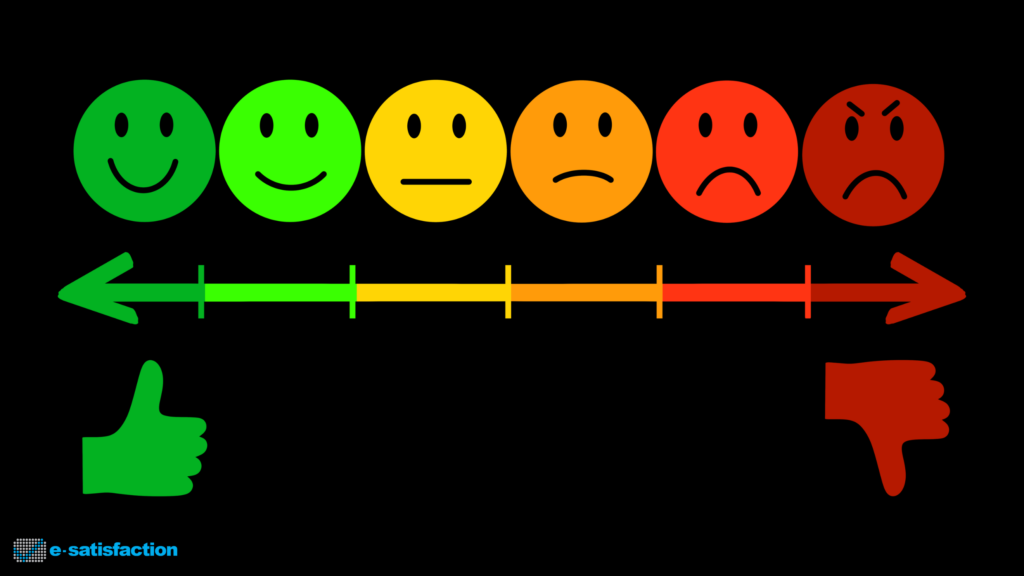
The Likert scale is a psychometric scale designed to gauge individuals’ attitudes and opinions towards a particular statement or set of statements. It typically consists of a series of items or questions, each accompanied by a range of response options. Respondents are asked to express their level of agreement or disagreement with the provided statements.

The Likert scale involves 5 or 10 response options; some researchers opt for the more nuanced approach by expanding the scale to include 10 response options, which allows for finer distinctions in respondents’ opinions, offering a more detailed picture of their attitudes.

Benefits of Using the Likert Scale in Satisfaction Surveys

1. Quantifiable Data:

The Likert scale provides a structured and quantifiable way to collect data on respondents’ opinions. The numerical values assigned to each response option allow researchers to analyze and interpret the results with statistical methods, making it easier to identify trends and patterns.

2. Ease of Administration:

The Likert scale is straightforward and easy for respondents to understand, reducing the likelihood of confusion and ensuring a higher response rate. Its simplicity makes it accessible across diverse demographics, making it an ideal choice for a wide range of satisfaction surveys. 

3. Versatility:

Whether you are measuring customer satisfaction, employee engagement, or any other subjective experience, the Likert scale can be adapted to suit various contexts. Researchers can customize the scale’s wording and response options to address specific aspects of satisfaction relevant to their study. The 10-point scale, in particular, allows for more nuanced distinctions in respondents’ opinions.

4. Comparative Analysis:

Both the 5-point and 10-point Likert scales enable researchers to conduct comparative analyses, comparing satisfaction levels across different groups, time periods, or other relevant variables. The expanded scale’s additional response options offer a higher level of detail in assessing differences in opinion.

5. Statistical Validity:

Regardless of the number of response options, the Likert scale is well-established in the field of psychometrics, and its statistical properties are widely recognized. Researchers can employ various statistical tests to assess the reliability and validity of survey results, providing a solid foundation for drawing meaningful conclusions.

In conclusion, the Likert scale, whether employing 5 or 10 response options, stands as a reliable and widely adopted tool for measuring satisfaction in surveys. Its simplicity, quantifiability, and versatility make it an invaluable asset for researchers seeking to gain valuable insights into the attitudes and opinions of their target audience. Whether you choose the traditional five-point scale or opt for the extended 10-point version for more nuanced responses, the Likert scale remains a tried-and-true method for capturing the nuanced landscape of subjective experiences.

e-satisfaction.com at ShopX Conference by Boussias


Warning: Undefined array key "className" in /var/www/vhosts/e-satisfaction.com/httpdocs/wp-content/plugins/satisfaction/inc/blocks/heroimage/heroimage.php on line 7

Customer Centricity & Customer Engagement are part of a company’s culture, not just a tactic or a marketing approach. They define the way you are doing business or as HubSpot’s Paul Greenberg says: “Customer engagement is the ongoing interactions between company and customer, offered by the company, chosen by the customer.”

On Wednesday 22/09/21, e-satisfaction.com was part of the online conference ShopX by BOUSSIAS, focusing on ‘Maximizing Sales for Brands and Retailers’; A live, online & interactive event that brought the notion of Customer Centricity and CX even closer to the Greek Market and the brands, by sharing innovative tech-tools & best practices around retail, shopper experience & customer engagement.

e-satisfaction.com, as the dominant feedback solution in the Greek retail market, was part of the knowledge & insights sharing via a Virtual Booth, a Fireside Chat with special guests from abroad, a Panel Discussion with experts from the market and a  real Case Study of a Greek retailer.

How can you gather Feedback and enhance your Customers’ Experience? What did the Experts say?

At our virtual booth, the audience had the chance to watch our team talk about:

  • CX Trends and CC Valuation
  • e-satisfaction CX Fundamentals and Market Insights

If you missed this event, you can download our free e-book about Customer Experience Fundamentals.

The Fireside Chat, with our CEO, Evangelos Kotsonis, as a coordinator, focused on Retail & Customer Centricity (see the participants of the Chat, here).

Key takeaways:

    • Seamless experience needs an ecosystem-based way of working
    • Frontline employees are still crucial for a good experience. Technology should be making their work easier and more impactful
    • Trends should be taken seriously and be transformed into strategy, not just communication
    • Chinese eCommerce capitalized the absence of good retail experience and now 50% of retail sales happen online

The Panel, with experts from the Greek Market, discussed Shopper & Retail Data, Customer Centricity and the value of Consumer Feedback, to help brands & retailers grow their Market Share and enhance the Brand Experience for their consumers (see the participants of the Panel, here).

The Panel concluded that brick-and-mortar stores and people in the frontline, are still at the center of brands’ attention when it comes to Data Capturing.

During this panel, we also asked the audience their opinion about data capturing and here are the answers: 

  • 44% said that Store Managers are their source of truth, when it comes to store feedback & insights
  • 47% said that Consumer Comments is the most worthy source of information

Case Study: Public & Media Markt – When building customer centric culture in retail, begin with the frontline

During ShopX, we showcased how e-satisfaction.com helped PMM shape a Customer Centric culture by collecting actionable insights from our platform. By capturing everyday CX data and translating them into customer facing actions, PMM revolutionised the way they engage with their customers. How? By focusing on the frontline and measuring NPS at store level on an ongoing basis to get feedback from consumers about their experience across all touchpoints

Do you want to know how retailers and brands learn what their customers want? Book a free demo with us here, to learn more about e-satisfaction.com and help you by asking the right questions and listening to the answers.