Customer Retention: Easier than ever with e-satisfaction

How can you respond promtly to customer complaints?  Use e-satisfaction’s automated e-mail alerts feature to manage complaints quickly and in a personalized manner.

If you go across every guide on how to increase customer retention, you will find a single, high level rule of thumb that you should follow: “Respond promptly, be polite and resolve the concern”. This is correct, but how easy can it be when you do not even see or talk to the customer? How can you respond promptly when you are not there when the complaint is raised? This is a great challenge and this is why we created automated alerts!

Automated e-mail alerts are sent to your e-Business customer service/ management teams when an unhappy customer raises a complaint or declares to be unhappy by a shopping experience in your business. A very important characteristic of the automated mail alerts is that they are linked to a specific order id, so you know who is behind each complaint, so you can manage it in a personalized manner, building the bond you want to built with each and every customer!

automated email alerts


What to do with email alerts?

There are a lot of ways that you can use and manage such alerts. Examples of how our clients are using automated email alerts today can be found below, in the form of advice:

  • Reply – Several customers allocate a part of a day to follow up on customers that raised a complaint or declared to be not happy by their experience.
  • Automate – Customers with a large number of orders may face larger volumes of complaints or customers that need attention, so the development of different response templates for different occasions is possible.
  • Inform – By using e-mail alerts, top level management has the opportunity to get a taste of the customer service process and the customer satisfaction levels on a daily basis. Turn it on once and you will never turn it off again as it is a perfect, filtered stream of customer voices that you want to receive!
4 ways to increase your customer’s lifetime value!

Customer lifetime value is one of the most important metrics of your business. Discover 4 easy and quick ways to increase your customer’s lifetime value!

Customer Lifetime Value! What does it mean?

Customer Lifetime Value is one of the most important metrics of your business as it is the metric that indicates if your business will be viable and profitable in the long term. CLV refers to the projected revenue each customer will generate during their lifetime, so increased CLV means less acquisition cost and more revenue, thus long term profitability!

A study from ThinkJar revealed that it costs 6 to 7 times more to gain a new customer than to keep an existing one! Therefore, all efforts should be placed in increasing your customer’s satisfaction throughout their entire customer journey and extend their lifetime value.

How can CLV be increased through customer centricity?

The most important thing you can do to extend the CLV index is to develop a strong bond with your customers and make them feel that “this company gets me”, so the next time they will need something they will not search somewhere else, but they will come directly to you. There are a lot of ways to achieve this and the one thing that you should never forget is that there are real persons behind every transaction, so all you have to do is understand their needs and communicate with them in a personalized way, just like you would do with a real human.

This is not an easy task when you manage tens or thousands of transactions every day, so you need to get the right technology in place. e-satisfaction.com, taps into your customer’s mind and gives you the opportunity to trigger personalized communications based on the experience your customer had when buying from you.
This personalized communication comes from e-satisfaction.com‘s built-in marketing campaigns that you can use without having to bother your technical team. Easy, plug n play, fast and effective!

  • Refer a FriendAsk your happy customers to refer you to their friends! You can have a quick look on a successful case study that generated a 3% revenue increase with no marketing cost!
  • Callback Request – Who said customer recovery cannot be automated? Have dissatisfied customers ask for a callback and solve any possible misunderstandings, converting them into happy and loyal customers! Click here to read more about the Callback Request mechanism.
  • Banner Campaigns – Usually customers leave when they finish checkout. Instead of this you can use the thank you page to create awareness, or even to transfer every client that completes checkout to the next action you want them to do. Check your loyalty program, discover your new stores, or a Free Delivery offer are some of the actions our customers have chosen.
  • Reviews Campaigns – Do you want to increase your Word of Mouth and inspire more trust to potential customers? Do you need more reviews in marketplaces, in Facebook or Google Places? See this case study to discover how to increase positive reviews by 79%!

Not all customers are the same! Personalize your marketing messages to show your customers that each and every one of them is unique for you! If you want to learn more, schedule a demo with our team and discover how your customers will reward you!

Schedule a Demo


What is Humanized Marketing?

Humanized Marketing; the new wave every e-business should ride! Personalize your marketing with e-satisfaction’s Humanized Marketing Automations based on your customer’s feedback.

Imagine the best online shop, with the best design and the easiest checkout process you have ever experienced and imagine calling this e-shop to ask about which number fits you best and in response you get a machine generated response that guides you through the process of deciding. Automated, sleek and fast, but would you love it? Would you enjoy this experience? Would you say that you have a bond with this brand?

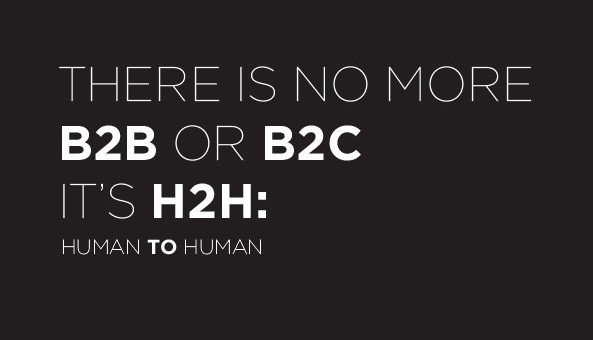
Humanized marketing is a wave that every e-business should ride. Humans today seek for inspiring experiences and they do like to interact with other humans, when they want and how they want to interact. This is what humanized marketing is all about, adding human elements across all stages of product lifecycle and consumer’s journey.

Personalized marketing. Is it personalized?

The first attempt of the online business and digital marketing ecosystem to the demand of customers for personalized experiences, is what is called “personalized marketing”. But what do “personalization” means today? In most of the cases, personalization is related to the user behaviour of a user in a website / eshop (e.g. abandoned cart, time spent on the cart, etc.), or it is related to the shopping behaviour and shopping history each customer had in the past (i.e. frequency, days since last transaction, etc). These approaches, even if they are much better than plain push marketing, they handle customers as a set of clicks or purchases, forgetting that customers do not have transactions, but they have shopping experiences. In short, customers today are dealt as pieces of data and not as real humans and this is why any attempt for personalization will be still missing a piece of information, the human piece that cannot be extracted from the human customer. It is necessary to interact with the customers if we want bonds to be created with them.

The first step, become customer centric

The first step towards becoming a more human business is to establish organizational values and commitments that are customer driven. It is a way of saying to consumers “I am listening. I know what you want, I know what you need, I know what you enjoy and I will be with you in every step of the way”.

There are two rules of thumb to follow, simple but really important:

customer centricity

  • Make it easy for them to talk by setting up feedback and interaction mechanisms in various points of the customer’s experience. Keep it short, relevant, fast and easy
  • Respond to the feedback and leave nothing un-answered. You may need to develop answer scripts, you may handle one piece of feedback at a time and respond but in all case, make sure that you provide a relevant response, put in the same way that you would treat a real person walking into your store.

The more you show your Human side, the more likely it is for consumers to be willing to connect with you and become your promoters. Just start dealing them as humans and not as clicks and sales data!

Can e-satisfaction help me in this process?

e-satisfaction has been designed to be human centric and easy. Easy for you to set up and use, easy for your customers to respond and interact. Moreover, to help you become customer centric and get one step closer to your customers, we introduce  the Humanized Marketing Automations. A set of mechanisms such as refer a friend, call back request, alerts, etc. that are triggered in response to  the feedback that customers provide.

By combining these automations, e-businesses have the chance to build personalized campaigns based on the experience of each and every customer had, during while walking through their customer journey, responding to their feedback and bring them closer to the feeling that “this business really gets me”!

How to Create Engaging Visuals

Useful tips on how to make the perfect visual to engage your customers and make them click where you want them to click!  

tell your story with visuals, create engaging visual, capture your audience attention

“Learning how to effectively communicate your message will never go out of style”, Kristi Dosh (Forbes).

There is no debating that if you are looking to grab user’s attention, you need captivating visuals. As humans, we process visual information 60.000 times faster than text. Thus, creating an engaging visual is essential, as it will allow you to connect with your audience in an emotional level,  leave a lasting impression by hitting the right emotional notes and make them feel special and happy!

During the past months the customer success team of e-satisfaction talked with a lot of e-businesses using the Funnel Extension Image feature and in this article you can find our first learnings, alongside with advice on how to make the perfect visual that will engage your customers and make them click where you want them to click!

  • Create clear and concise visuals that are action oriented and capture your consumers’ attention! When developing a visual you should know what you want to achieve with each visual. Examples of objectives that our customers have used include increase of reviews in third party review sites (i.e. Facebook), create awareness about their new store or their loyalty program, etc.
  • Use Call to Action buttons! They are essential for every campaign as they guide consumers towards an action they should take.
  • Your button color matters. Generally speaking, green and orange buttons have been proven to perform best. However, button’s color will depend on your visual design.
  • Create urgency. Use bold, confident and commanding words in your Call to Action button to convince consumers that they should not wait any longer to act, otherwise they will miss a great opportunity.
  • Mind the space. Leave enough space around your button so that it is not cluttered and the call to action is crystal clear. It needs to command attention without overwhelming your visual’s design.
  • Use complimentary colors, namely contrasting colors such as blue and orange. A burst of color gives consumers a visual break and makes the content more engaging.
  • When implementing color in a visual, it is recommended that the 70% of your visual should contain a main color and 30% should contain a complimentary color.

By using some of the advice given above, our clients get what they want, as Funnel Extension Images have an average click rate of 20%. So, do not wait any longer! Define what you want your customers to do after finishing checkout or after delivering products and use these tips to design the most engaging visuals they have ever seen!

Praktiker uses e-satisfaction to understand where online visitors come from!

Praktiker got more than 17.000 responses from its visitors and made clear estimates on the effectiveness of their marketing budget, while using e-satisfaction’s custom questions mechanism.

praktiker_case_study

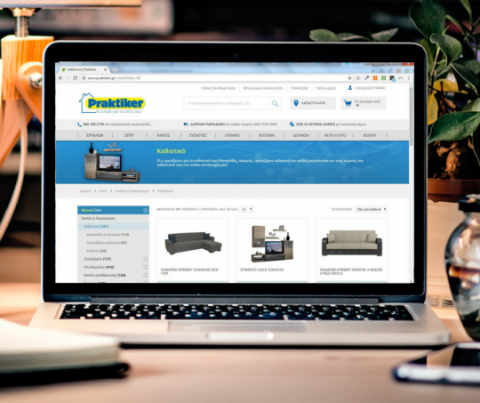
One of the most common questions Marketers have to answer is “does my advertising budget have the result I want to have?”.  Praktiker wanted to answer this question and more specifically to understand if the marketing efforts that are made both in digital and physical space generate traffic for the online store of Praktiker, the e-shop www.praktiker.gr.

Common analytics platforms do a great job in providing insights related to digital channels and are great at telling how many visitors come from digital mediums. However, they do not answer how much impact and traffic the physical stores generate to the e-shop or what is the impact that a TV campaign had. The reason that web analytics tools cannot provide this information is that it can only be measured by asking the visitors of the e-shop and not by examining their previous click or their behaviour in the e-shop.

This is where e-satisfaction came to help Praktiker. The platform of e-satisfaction has been built to help e-businesses collect credible feedback from visitors and customers, understand what this feedback actually means and leverage this feedback to generate value. One of the mechanisms that e-satisfaction uses, on the understand part, is the custom questions, which are questions that can be added at any stage of the customer’s shopping journey, purposed to get a better understanding on what is in the mind of the visitors and customers. In the case of Praktiker, the challenge was to understand where visitors come from, so a custom question was asked at the browsing stage (shortly after a visitor enters the e-shop), asking customers what was the last place they interacted or saw Praktiker before visiting the website, i.e. information from store/newsletter, family or friend recommendation, TV ad etc.. 

With this mechanism Praktiker got repsones from more than 17.000 visitors of www.praktiker.gr, reaching to a conclusion that the major traffic source of Praktiker.gr (45%) is the network of physical stores, and that printed leaflets are also doing a great job in bringing customers to the e-shop. Also, by asking its online visitors, Praktiker realized that TV campaigns did generate traffic, but this traffic did not exceed 10% of the visitors in the e-shop whch can be considered a small percentage if compared with the rest of the channels.

By using the custom questions mechanism provided by e-satisfaction, Praktiker now has a number of the effect that each of the available channels have in digital traffic and can have a clearer estimate on the real effectiveness of both digital and media marketing budget.