The future of customer experience is predictive, personalized, and AI-driven. Brands are shifting from reacting to problems toward preventing them, from generic messaging toward tailored journeys, and from manual analysis toward AI that reads every customer signal. This post breaks down the three shifts, the data behind them, and how to prepare without losing the human touch.
The future of customer experience belongs to brands that stop reacting and start anticipating. The experimentation phase with AI is over. McKinsey’s global AI survey found 88% of organizations now use AI in at least one business function, up from 78% the year before. In customer-facing work, that shift is already changing what people expect from every interaction.
Customers now expect brands to know them, help before they ask, and respond in seconds. Meeting that bar by hand is no longer possible. Three forces are reshaping the field: prediction, personalization, and AI. Each is useful alone. Together, they redraw the map. Let’s look at what that future means, and how to prepare.
What Does the Future of Customer Experience Look Like?
The future of customer experience is proactive, individual, and machine-assisted. Brands will predict needs before customers voice them, tailor each journey to the person, and use AI to read feedback at a scale humans cannot match. The reactive, one-size-fits-all model is ending.
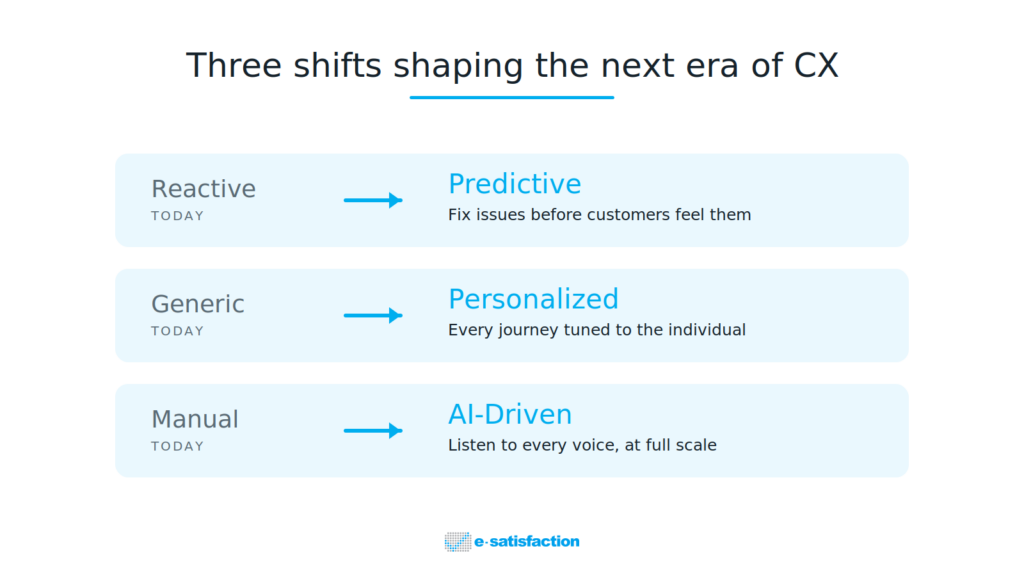
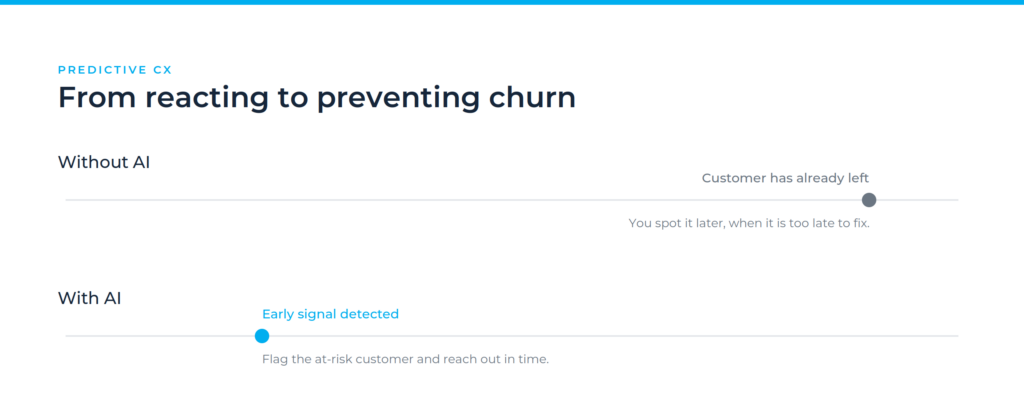
That plays out as three shifts. For years, most CX teams worked backward. They waited for a survey score to drop, a complaint to land, or churn to show up in a report. By then the customer had already decided. The next era flips that order. The smartest teams are building the data and AI in customer experience capabilities to move from scorekeeping to problem-solving.
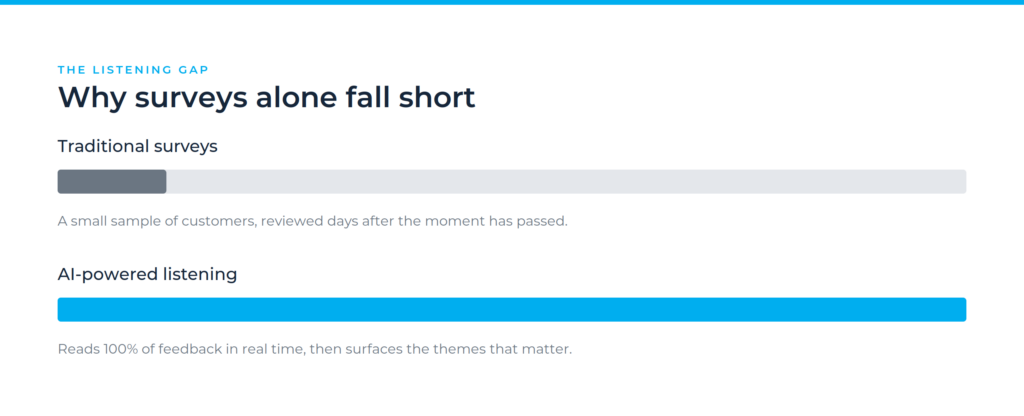
This is also why old feedback habits are breaking down. Many programs still lean on slow, sampled surveys that miss most of what customers feel. We covered this in detail in why traditional customer feedback programs fail without AI.
From Reactive to Predictive: Service That Fixes Problems First
Predictive CX uses data and AI to spot issues before customers report them. Instead of waiting for a complaint, brands flag a stalled order, a confused checkout, or a frustrated tone in real time. The goal is simple: solve the problem before it becomes a reason to leave.
This shift is already named by analysts. Gartner identifies proactive issue prevention as a defining trend reshaping customer service through 2028, with AI predicting service issues before they occur. The focus moves from managing demand to creating value.
Prediction depends on listening to weak signals. A drop in tone, a repeated question, a hesitation at payment: each is a clue. AI reads these patterns across thousands of interactions at once. We broke down exactly how this works in how AI detects customer frustration before it escalates, where AI sentiment analysis turns raw emotion into an early warning.
Why Does Personalization Matter More Than Ever?
Personalization means shaping each experience around the individual: their history, their context, their intent. It is no longer a nice extra. It is the baseline customers expect, and the gap between brands that do it well and those that fake it is widening fast.
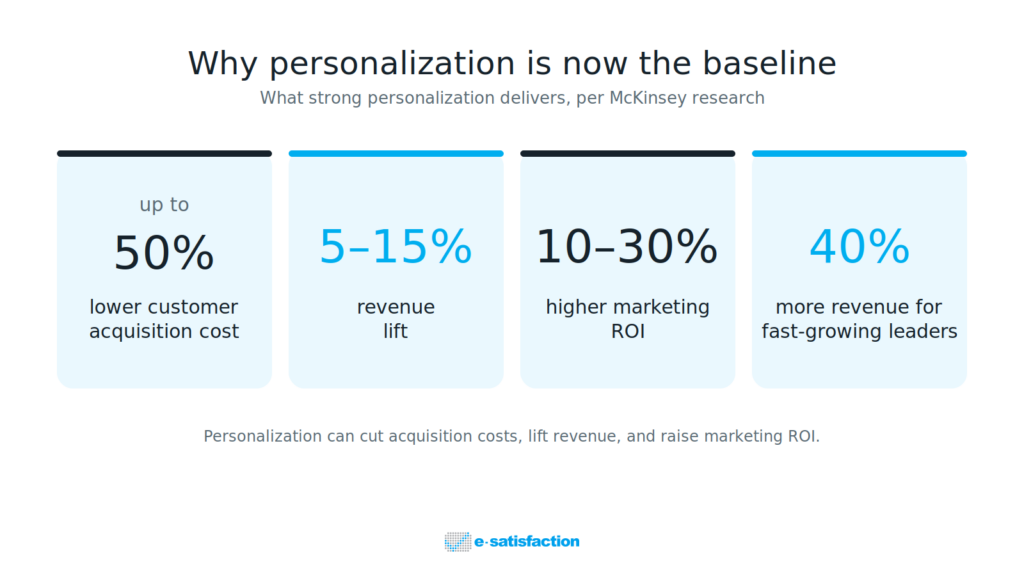
The business case is strong. McKinsey reports that personalization can cut customer acquisition costs by up to 50%, lift revenues by 5 to 15%, and raise marketing ROI by 10 to 30%. Faster-growing companies pull 40% more of their revenue from personalization than slower peers.
Yet most brands overrate themselves. Research shows 85% of companies believe they personalize well, but only 60% of customers agree, and 76% feel frustrated when personalization is missing. Closing that gap starts with real data, not guesses. Strong customer feedback analytics tells you what each segment actually wants, so tailoring is grounded in evidence.
Personalization at this level is hard to run on instinct. If your team is still stitching insights together by hand, see how purpose-built AI customer experience solutions turn scattered signals into tailored action.
How Is AI Changing the Way Brands Listen to Customers?
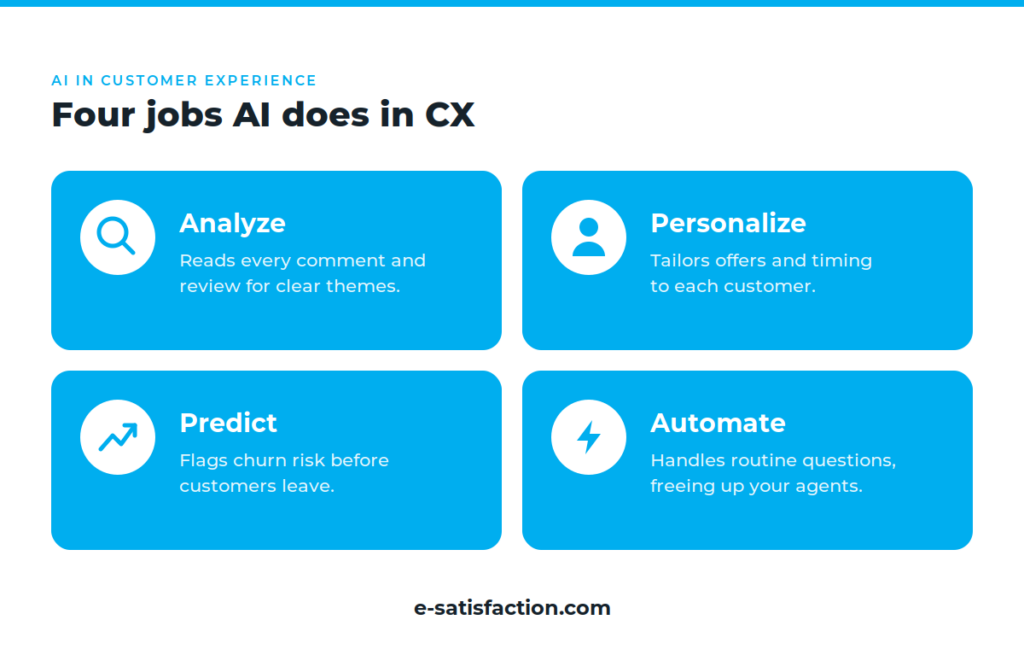
AI lets brands hear every customer, not just the few who answer a survey. It reads chats, calls, reviews, and open comments in their own words, then surfaces themes, sentiment, and intent. Listening shifts from a sample to the whole conversation.
This is the engine behind both prediction and personalization. Without it, the other two shifts stall. Modern AI Voice of Customer tools turn unstructured feedback into structured, ranked insight in near real time. That is the difference between knowing a score and knowing why it moved.
Free-text feedback used to sit unread because no team could process it at scale. Now conversational analytics reads it automatically. We traced this shift in from surveys to conversations: the evolution of customer feedback analytics, which shows why always-on listening is replacing the annual survey.
The Rise of Agentic AI in Customer Experience
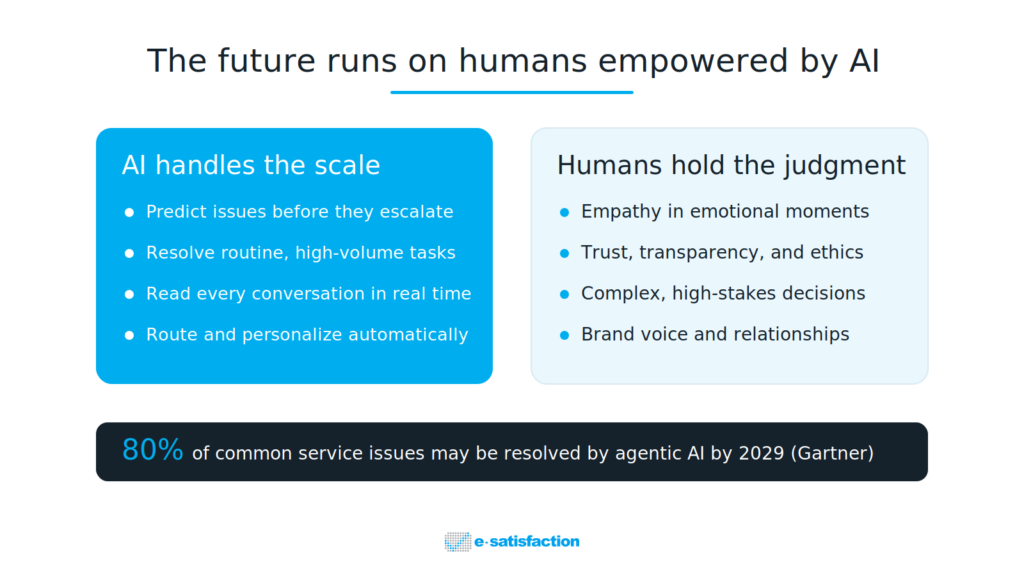
The next wave is agentic AI: systems that do not just answer but act. Gartner predicts agentic AI will autonomously resolve 80% of common customer service issues by 2029. These agents can navigate a process, update a record, or resolve a request end to end.
Adoption is real but still early, which favors movers who prepare now. The pressure is clear: a Gartner survey found 91% of customer service leaders are under pressure to implement AI. The winners will pair automation for speed with human judgment for everything that needs care.
Will AI Replace the Human Touch in CX?
No. The future of customer experience is humans empowered by AI, not humans removed from it. AI handles scale, speed, and pattern-spotting. People handle empathy, trust, and the hard calls. Hand emotional moments to a bot and satisfaction drops fast.
The risk is moving too quickly. Forrester warns that over-automating complex, emotional inquiries will frustrate customers and erode satisfaction, even as simple self-service improves. Trust is now measurable, and poorly built AI can spend it quickly.
That is why the strongest 2026 strategies treat AI as an amplifier of human judgment. Forrester’s CX predictions urge teams to shift from measurement without meaning toward advanced analytics and real problem-solving. The technology earns its place only when it makes the human experience better.
The Takeaway
Three points are worth keeping.
The future of customer experience is built on prediction, personalization, and AI working together. Each shift reinforces the others, and the brands that combine all three will pull ahead. It is also a data problem before a technology one, since you cannot predict or personalize what you cannot hear.
The brands that win will not be the ones with the most customer data. They will be the ones that act on it the fastest, with people and AI playing to their strengths. Ready to see your own feedback turned into predictive, personalized action? Book a demo and explore what AI in customer experience can do for your team.
Frequently Asked Questions
What is the future of customer experience?
The future of customer experience is predictive, personalized, and AI-driven. Brands move from reacting to problems toward preventing them, from generic outreach toward individual journeys, and from manual analysis toward AI that reads every signal. Human judgment stays central for empathy and complex decisions.
What is predictive customer experience?
Predictive customer experience uses data and AI to anticipate a customer’s needs or problems before they are voiced. It spots early signals, like a stalled checkout or a frustrated tone, and lets teams act in real time. The aim is to resolve issues before they cause churn.
How does AI improve personalization in CX?
AI analyzes each customer’s history, behavior, and feedback to tailor content, offers, and support in real time. Done well, this can lower acquisition costs, lift revenue, and raise marketing ROI. The key is grounding it in real feedback data rather than broad assumptions.
Will AI replace human customer service agents?
No. AI will handle routine, high-volume tasks and surface insight, while people focus on empathy, trust, and complex cases. Analysts caution that over-automating emotional interactions frustrates customers, so the strongest model is humans empowered by AI, not replaced by it.
How should brands prepare for an AI-driven CX future?
Start with listening. Build the ability to capture and analyze all customer feedback, not just survey samples, then layer prediction and personalization on top. Pair automation with clear human oversight, and treat trust and transparency as core parts of the design.