The 4 steps you should take while creating a Customer Loyalty Program

There are 4 basic steps that every business should follow when creating a customer loyalty program. We also have some great tips for you… all you have to do is read this article!

There are 4 basic steps that every business should follow when creating a customer loyalty program.

Step 1 – Research

The first thing you should do before the creation of your customer loyalty program is research. While conducting research you should be able to identify the following:

  • What your customers want
  • How much they are willing to pay for what you offer
  • What motivates them
  • Which brands or product categories they truly love

The above insights will help you find the sweet benefit spot between your customers and your business.

Another aspect that is of great importance when conducting a research, is to segment existing customers and your target market.  Additional information such as demographics, purchasing behavior and patterns will help you develop your strategy.

The more data you have in your hands, the more effective your Loyalty program can be.

Step 2 – Make a plan

From the moment you have completely understood your audience, you may develop your strategic plan for your loyalty program. Part of this strategic plan should be the creation of specific, measurable goals and key performance indicators (KPIs).

After setting up the above, the next step is to decide which loyalty program model and types of rewards, will motivate best your customers and offer them the most value. After all, everything is about the creation of value for your customers and how you may factor it for the benefit of your business. In other words, it is about creating value to your customers and transforming this value to an asset for your business.

Click here to read more about customer loyalty program types!

Step 3 – Build your program

After creating your strategic plan for your loyalty program, the next step is to figure out its structure by using all the information you have already selected. Determine the rewards your business will provide to customers, as well as the step by step procedure that they will follow to earn them.

Below you may find some ideas of reward-worthy actions:

  • Email subscription sign-up
  • Account registration
  • Birthday
  • Referral
  • Social engagement
  • Shopping on specific days
  • Money spent

Start by giving each of these actions points of values and determine how many points your customers need in order to earn a specific reward!

Step 4 – Let your audience know about the program

To be honest, the fact that you have now created a customer loyalty program does not mean that customers will use it or be aware of it. A wise thing to do, is to give that loyalty program an identity, by simply creating a landing page on your website, and by developing an awareness campaign and promote in-store tactics (i.e. educate sales associates). In other words, at this step all you have to do is get the word out, let your customers know that you have a Loyalty program.

We also have a bonus for you!!!

Below you will find 5 tips that will help you while creating your Customer Loyalty program.

1. Simplicity is the key

2. Start with your existing mailing list –  Your loyalty card will easily have its first members

3. Make it easy to join – E-mail address and Customer’s Name can be a good start

4. Make reward rules simple – Clarify the rewards

5. Make it about your customers, not about money – Be Customer Centric

Read more about Customer Loyalty:

6 Competitive Pricing Tactics any e-Commerce Company should use

Competitive e-commerce pricing is not based only on undercutting competitor prices and price-matching. Here you will find 6 wonderful strategies that can help you leave competition far behind by acting fast and using competitor price monitoring technologies.

Competitive e-commerce pricing is not based only on undercutting competitor prices and price-matching. If you are confident with using intelligence technology and approach your competitors in an analytical and organized way, you have a great chance of outperforming them.

Below you will find 6 wonderful strategies that can help you leave competition far behind by acting fast and using competitor price monitoring technologies.

1. Stay competitive & profitable

If all your efforts are focused only on the competition and you ignore production costs, your e-Business has a great probability to fail. Costs of production and competitive pricing are contradictory forces for any company in the e-Commerce world. However, product prices are highly related on both factors.

To be profitable, an e-Commerce company should be very careful about costs especially when attempting to adjust its prices with the ones of the competition. Rather than trying to cut into pieces the prices of the competition, it would be wise to take a look at your own costs and how you may reduce them to achieve long-term competitiveness in your industry.

If you have uncompetitive prices, the solution is not to just lower them, but to cut costs of your supply chain. When lowering your costs, then it is easier to lower your prices and offer special discounts as part of your commercial and pricing policy.

2. Don’t undervalue your products and actively identify price to get new opportunities

For many e-Businesses low prices in comparison to the ones of the competition, is not enough for being competitive in today’s market. Low prices can bring to your business the attention of shoppers and some of them will be eventually converted into customers. However, we recommend not to go too low with your prices.

You should aim to pricing your products at the maximum of the minimum. What does this mean? It means that your prices should be a bit below than the prices of the second cheapest competitor of yours. The slight increase in the price will not be of great importance to online shoppers and shopping comparison engines. Nonetheless, this strategy will increase your company’s profit margins at no costs.

3. Analyze category and brand level pricing strategies of your competitor

Usually, e-Commerce prices are based on brand or category level decisions because of certain factors such as supplier deals valid for specific brands and budgeting operations of the e-Business. Nevertheless, focus is given only on micro-managing product prices and product price monitoring of the competitor.

The solution here is to use the right technology to gather information about the category and brand level pricing of your competitors. A method that could be used is aggregation. This means that product groups of a specific category or brand are created and then the overall price performance is calculated for every e-Business separately.

An index value for the aggregated level for a specific brand or category, will provide your e-Business with detailed insights about the price-related performance of particular brands and categories. The above will give your e-Business the opportunity to discover the advantages and disadvantages of various competitors in respect to brands and categories.

After careful analysis, you will be able to adjust your price level on the basis of comparative results of overall brand and category management strategies and not in speculations.

4. Examine historical pricing trends of your competition and find out insights about their sales such as weekend discounts and flash sales

Shopping can be viewed for online consumers as a matter of the present moment. This cannot be legitimate for pricing.

In more detail, most of the e-Businesses have discount pricing strategies that focus on time-based tactics. For example, some companies are famous for their weekend sales, while others have a strong base of loyal customers bound to the late-night flash sales.

When knowing the trends that your competitors follow, you may react and actively compete them. Never forget that being competitive in such manner is equally important as offering competitive products. The reason behind this statement is that campaigns and trends are not only a matter of offering a discount. Their real and most valuable purpose is to create a loyal base of customers. Therefore, you should always track actual prices and the historical trends that your competitors follow.

5. Observe at out-of-stock products of your competitors

Prices are important to both consumers and e-Business. However, prices are not more important than product availability is. Online shoppers will not consider a product, no matter its competitive price, if it is not available.

In this case, the consumer will most likely look for a similar product at some other e-place. Unavailable products are very much alike to expensive ones that are not of interest to a specific target group.

If you know the out-of-stock products of your competition you create a great pricing opportunity for your e-Business. When your competitors are out-of-stock for a product with a tight margin, online shoppers will be willing to pay more to buy what they are seeking for. Thus, if your company has available stock for this specific product you automatically gain a competitive advantage.

6. Use data to negotiate better deals with suppliers

Data is useful for every business. no matter its size and industry, and is a powerful weapon in business negotiation, as it gives you the advantage of presenting an objective argument. Reliable data cannot be challenged, and suppliers know it.

Without having data in your hands, you are basically complaining to suppliers about the prices competitors receive. Hard evidence presented in a structured way about a supplier-affected disadvantage of your competitors can change the situation upside down.

Also, with the correct data you may identify the relationship between your competitors and suppliers. After that, you will be confident to ask and negotiate for the best deal for your e-Business.

Conclusion

Competitive pricing intelligence is a multi-dimensional analysis that goes beyond simply monitoring product services and comparing them with the competition. This type of monitoring can provide a profit boost to your e-Business and an increase in sales. However, your potentials do not stop here. If you carry out the above tactics, you will soon find your e-Business to surpass competitors in the contemporary highly competitive e-Commerce market.

Original Article Written by Prisync!

Customer Loyalty Programs: Will they benefit my business?

Have you ever wondered how much it costs to a business to acquire a new customer compared to the costs for selling to an existing one? From research, it has been indicated that it costs about 5-25 times more to acquire a new customer than it does to sell to existing ones. Not only that, but existing customers spend 67% more than new customers. Therefore, customer loyalty really pays off!

Have you ever wondered how much it costs to a business to acquire a new customer compared to the costs for selling to an existing one?

Harvard Business Review indicated that it costs about 5-25 times more to acquire a new customer than it does to sell to existing ones. Not only that, but existing customers spend 67% more than new customers.

Therefore, customer loyalty really pays off!

While considering the above numbers, every business needs to think about what they are doing to keep customers coming back to them.

In a nutshell, customer loyalty reflects a customer’s willingness to buy from a certain brand again and again, and this is the result of positive customer experience, customer satisfaction and the value of the products/ services a customer receives from a transaction. If you want to know more about customer loyalty and its meaning, you may click here.

Since it is evident that it costs more to acquire new customers than to retain existing ones, the idea of mobilizing and activating loyal customers to recruit new ones, by simply evangelizing a brand, should be an exciting thing for marketers, salespeople and the customer success teams. To execute this idea, businesses will need a Customer Loyalty Program.

What is a Customer Loyalty Program?

customer loyalty programs

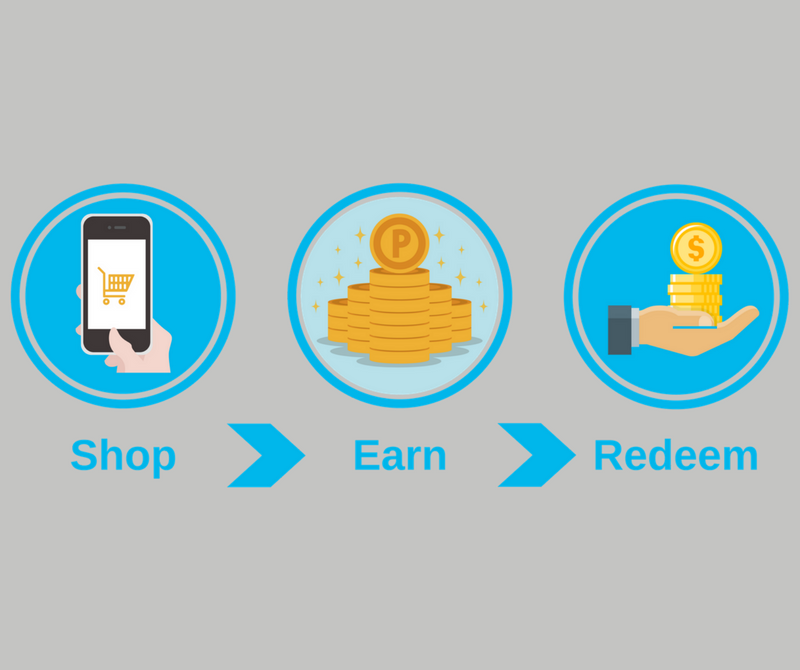
According to Nielsen, Customer Loyalty Programs are marketing programs that reward members with purchase incentives. These programs track purchase behavior and reward customers for their loyalty to a brand. The premise here is very simple: the more customers shop and spend, the more they will receive in return.

Customer Loyalty Programs indicate a relationship between a brand and a customer. These programs are a way of rewarding your repeat customers and encourage them to stay loyal. Rewards may include free merchandise, rewards, coupons, or even advanced products. However, a good loyalty program is not just about rewards, rather it is a channel through which a brand can strengthen customer relationships.

In fact, Nielsen found that 84% of consumers are more likely to choose businesses that offer customer loyalty programs and, 59% stated that these programs are available where they already shop.

Do you know the goals of a Customer Loyalty Program?

The primary goal of a customer loyalty program is customer retention. Another important goal of these programs is data collection. Demographic, behavioral and purchase data can be used to create personalized and targeted marketing campaigns which will result in sales increase. With this kind of data on purchasing behavior, it is easier to segment customers, create customer personas and obtain insights to help in the creation of new incentives. Nonetheless, data analysts and marketers must be very cautious when collecting customer data as what might seem as personalization to the marketer might be perceived as an invasion of privacy by the customer.

Benefits of Customer Loyalty Programs

benefits of customer loyalty programs

Customer loyalty programs can be very beneficial for every business no matter size or industry.

As already mentioned above, engaging existing customers could cost less and create more benefits for your business in the long run.

The success of a brand doesn’t merely depend on the value of a customer’s single purchase; rather, it’s about the values the customer offers over its lifetime (Ankit Runwal, marketing specialist at Social Annex).

Let’s take a deep dive into the benefits of customer loyalty programs!

Customer referrals are one of the biggest benefit of these programs. According to the Bond Loyalty Report, 73% of members are more likely to recommend brand with good loyalty programs.

Another benefit of a well-implemented customer loyalty program is Customer Satisfaction. As long as the rewards and incentives offered are of value to your customers, they will in return feel appreciated and grateful towards your business. Thus, a strong emotional bond will be present between your business and your loyal customers.

Effective loyalty programs are able to increase customer lifetime value and ROI (Return On Investment), as many consumers modify spending amount to maximize points and get the reward you are offering them. Therefore, the members of your loyalty program are likely to spend more during each visit to your e-shop or offline store. Repeat customers can create a steady flow of traffic which creates a steady stream of income and as your loyalty program grows the more predictable retail sales numbers become.

Conclusion

It is important to have in mind that a customer loyalty program goes beyond rewards. According to Schneider customers will remember their experience with a brand long after they’ve forgotten a discount. Companies cultivate true customer loyalty by making customers’ lives easier and making sure each engagement – whether in person or in app- is valuable for them.

Want to know more about Customer Loyalty? You may also read:

https://www.e-satisfaction.com/ebook-customer-experience-fundamentals/

3 Pricing Strategies That Every Ecommerce Company Should Know

Let’s see how you can start caring about your ecommerce pricing in your site as much as your customers do – or even more – depending on your market positioning.


Imagine that you are inside a shop! Can you recall the actions you took and the feelings that evoked during this process?

Well, most probably you took your time to wonder around the store to find something that caught your attention, such as a t-shirt, a shirt, a pair of jeans or whatever item this shop was selling. You quickly hold them on and imagine yourself wearing them. You smile. You want to make these items yours. So, the next step is to find their price tag, turn it around and check how much it costs.

And it costs a lot. This was exactly what you feared of and now you start playing scenarios in your mind. If you buy this amazing item, you most probably must save money from other activities in your free time. Not wanted to do so, you give up and leave the shop disappointed.

The above is a quite common offline shopping story no matter what type of products a shop sells. Have you ever thought if the same experience progresses differently in e-commerce, namely while shopping online?

Actually, online experience seems to progress a lot differently as you don’t need to flip the pricing tag. Prices appear in front of your eyes right away along with the product name, its description, its photo etc. It therefore becomes evident that online pricing of products becomes one of the most important qualifiers when you start searching a specific product in an e-commerce website.

What do you think… Do your customers care about your online pricing?

The answer is pretty simple. Online pricing matters to each and every customer.

Let’s see some findings that will show you how much and why you should care about your online prices:

  • More than 60% of online shoppers worldwide consider online pricing as the very first criteria affecting their buying decision.
  • Around 90% of online shoppers are quite savvy on searching deals and invest time for that before deciding on making a purchase. This time is measured to be around 10 minutes per every purchased item.
  • Price Comparison Engines and websites are a crucial part of e-commerce marketing, as they form around 20% of e-commerce traffic for all sort of product categories.

From the above it can be inferred that e-commerce companies of any size from all around the world should focus their attention on online pricing management operations and view it as a team sport, rather than under the management of few people in the company.

If taken seriously and managed accordingly, companies would see that online pricing can act as a marketing tool and in turn, have a major impact in the conversion rates of product pages.

Let’s take a dive and see how you may start caring about your e-commerce pricing in your website as much as your customers do and start getting most out of it!

1. Cost-oriented e-commerce pricing

cost oriented pricing

Any ecommerce company should be aware of its costs and one of its pricing strategies should be cost-oriented. This pricing approach requires the company to be able to identify its unit product costs for each of its products, set a target profit margin for each of those products and then, price the products as the sum of the unit costs and the target margin.

It may sound too obvious but most of the ecommerce companies seem to lose track of their unit costs and fail to apply this strategy, missing the balance between their unit costs and product prices.

The main reason behind this miss is that unit costs differ for every company and the environment the company operates in. This means that the unit product cost is not defined only by the cost an ecommerce company pay to the supplier of that product, but it is also about all the associated operational costs that a company has in order to deliver that specific product to its end-consumer.

In more detail, the target profit margin should be the one that will maximize the total profit gained for an ecommerce company. The target profit margin does not depend on the company, still it depends on the market and the buyer personas.

However, cost-oriented pricing should be the basis for other strategic online pricing approaches and should by applied in correlation with them, as on itself it can either undervalue a company’s products or undermine its competitiveness depending on both the calculations and profit targets.

2. Market-oriented e-commerce pricing

market oriented pricing

An ecommerce company, like any other company in any industry, is not alone in this world and in its market. There are tons of active companies in the same industry and therefore, they directly compete with each other.

From the above it is made clear that a company cannot only focus on its costs while creating a pricing strategy, but attention should be given to the market competition. Consumers care a lot about online prices and they compare your prices with your competitors. This makes it even more clear, that market-oriented pricing is a necessity for every business.

The major advantage of market-oriented pricing is that it sometimes indicates an increase in pricing opportunities where your prices might be low compared to the competition. Furthermore, the implementation of a market-oriented pricing strategy can help online companies achieve a sustainable and unbeatable competitiveness.

However, while identifying a company’s pricing strategy both cost-oriented and market-oriented pricing should be taken under consideration, for not having loss-making price points for some or all of its products.

3. Consumer-oriented e-commerce pricing

consumer oriented pricing

Customer centricity is a very important aspect of every commerce activity and it should come first no matter what. Therefore, pricing decision making should not be an exception to that.

To offer customer centric price-points to your targeted audience, you should be able to answer these 2 questions:

  • What is your e-shop’s unique selling proposition?
  • Who are your customers?

The answers to these questions will help you obtain a solid self-awareness for your company and the value it offers to consumers. After that, a company can easily identify whether a slim margin can work, or how important is the placement of the prices next to the product and most importantly it will be able to make better decisions in similar pricing arrangements.

To conclude…

The pricing approaches mentioned above are the 3 most core strategies and they are depended on each other. The case here is that you do not have to choose one and neglect the others. They work best when applied in a combined way and when they help company’s growth.

Original Article Written by Prisync!

6 Steps to Worthwhile Marketing Automation!

Automation could be the best thing to happen to digital marketing. The current marketing landscape is so vast and competitive that anything offering the ability to improve workflows without sacrificing the effectiveness of campaigns is worth its weight in gold. But, as useful as it is, marketing automation is only as good as the marketing being automated.

Automation could be the best thing to happen to digital marketing. The current marketing landscape is so vast and competitive that anything offering the ability to improve workflows – saving time and increasing productivity- without sacrificing the effectiveness of campaigns is worth its weight in gold.

The evolution of marketing automation technology presents opportunities that were unimaginable just a few years ago. Marketing automation has the potential to make lead generation easier and more efficient than ever. However, the success of any lead generation tactic has always be depended upon the effectiveness of the strategy supporting it.

Having a piece of software to take care of the bulk of your marketing, frees you up to focus on other areas of the business, like research and development, customer experience and a huge backlog of e-mails in your inbox.

But, as useful as it is, marketing automation is only as good as the marketing being automated.

Automation can’t make miracles. It can’t make bad marketing look good.

This makes the process before setting your automation extremely important. This is exactly where the human element should make its robust presence. The marketing team must come up with a solid strategy – one that gives automation the best possible chance of getting positive return on investment.

To achieve this, there are 6 steps that need to be pursued!

Step 1 – Market Research

 “Marketing without research is like driving with your eyes closed” – Dan Zarrella.

During your research, you should find out the following:

  • Who is your targeted audience?
  • What do they look like?
  • What they consider when making a purchase
  • What prices they feel are appropriate
  • Their likes and dislikes of current products/services
  • Things they would like to see improved

Collect this data, analyze them and also take a look at how competitors operate. 

Step 2 – Find your voice

People tend to buy on emotion and justify with logic. It seems that they want to feel a connection with a brand or business. This connection surely comes from how you present yourself.

Your brand’s tone of voice should be in keeping your audience and in speaking the same language as they are. Your tone of voice needs to be aligned with your overall brand message – one that instantly informs people who you are and why you are their best choice.

Step 3 – Establish point of communication

How are you going to reach your audience?

An obvious choice is social media. Facebook has over 2 billion users, Instagram over 800 million, Twitter 330 million and LinkedIn over 450 million. There is also YouTube, where over 1 billion watch videos every day, and platforms such as Pinterest, Snapchat, Viber, Google+, all of which have user bases in the hundreds of millions.

Your audience surely exists on social media, it is up to you to find out where.

Step 4 – Create a campaign

Design and build your campaign with the customer in mind. Your market research can help guide this process. Take what your audience is into and use it to inspire something memorable that fits in with your brand story.

You might not get it right from the first time, but you have the next step to amend that.

Step 5 – Testing, testing

It is always about testing. From designs to content to email headlines to customer segmentation, test everything. Test campaigns against different points of communications to find out what works, what needs improvement and what doesn’t belong there.

Test one thing at a time, gather all need information and concrete statistics and then, it is time for optimization.

Test, learn, adjust and test again!

Step 6 – Showing the human behind the automation

With the above steps in order, marketing is ready to be automated, but the human element shouldn’t disappear from the whole picture.

Automation delivers your message to your target audience as efficiently as possible, but it’s important to remember that you are marketing to people; and these people want to feel that there is a personal connection with the business.

To conclude…

Automation only displays what you feed it withFollow the above steps and you will be rewarded with the results your efforts deserve!